All Roads Lead to Pasta
Let’s get something straight. One does not simply cover the Roman Empire in a short article. If you want quick recs and no story, skim this article and look out for the bold text. Otherwise, continue reading.
“WHEEEENNNNNN the moon hits your eye, like a big pizza pie, that's amore,” I sang. Brennan rolls his eyes as his nth nerve just explodes.
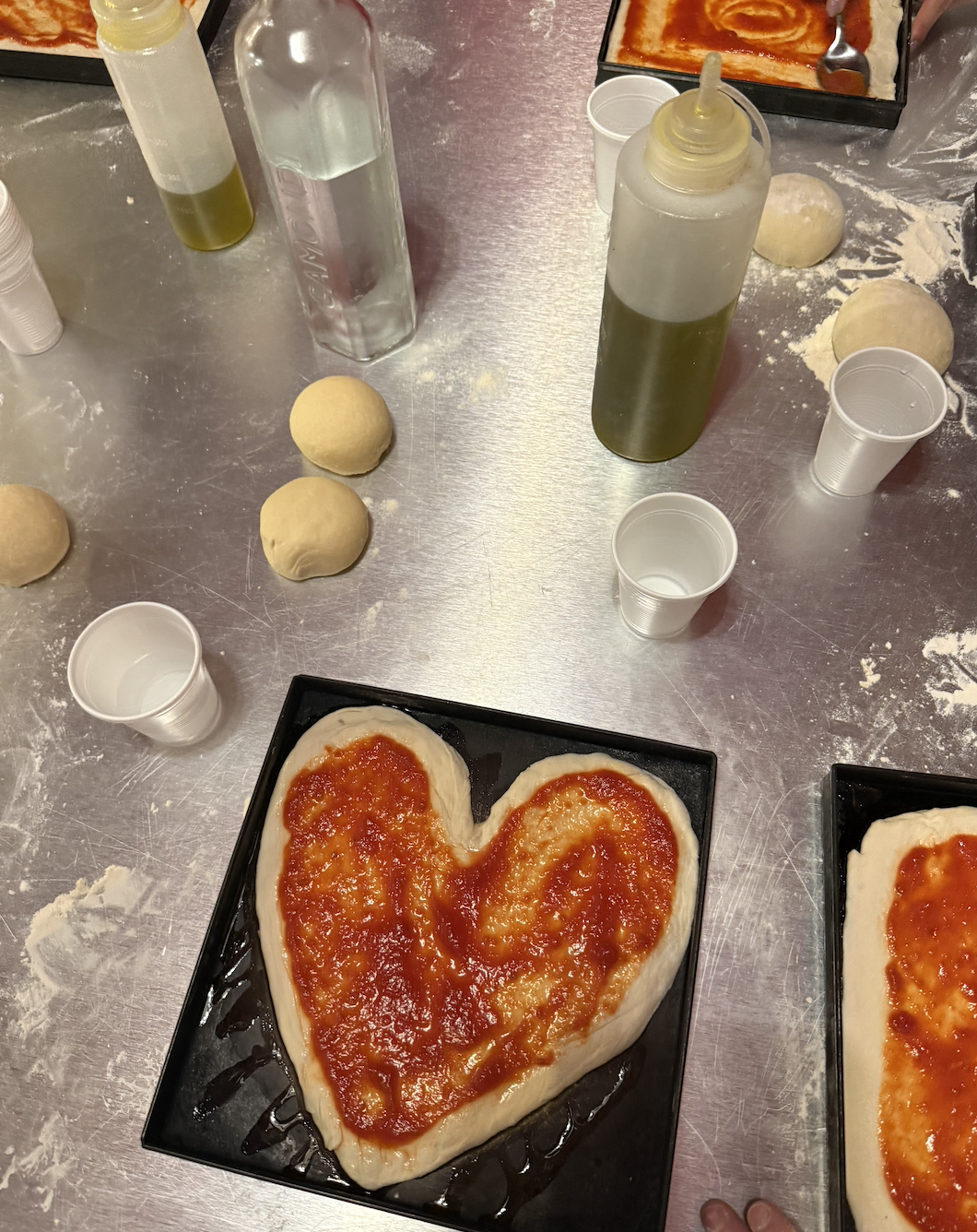
Rome has a pizza my heart
I could not (for the life of me) get this song out of my head before, during, or after our trip to Italy. Obviously, I was very excited. Of all the countries in Europe, Italy, Greece and France were the ones I dreamed of visiting the longest (though Portugal is now in my top 3).
Ah, Italia. Where steps count and carbs don’t. Our original plan was to visit Venice, Rome, and the Amalfi Coast, but I learned a little late that November is the rainiest month in Italy. The gloomy beach and flooded canals sounded unpleasant for our romantic getaway, so Brennan and I pivoted to Rome and Prague and hoped for clear skies. I literally checked the weather forecast every day the week leading up to our trip.
We got very lucky. Thankfully, we only experienced some rain late at night. Otherwise, it was all sun. You won’t need to worry much about rain in the first half of November, but the second half is usually heavy, frequented showers and storms.
We also happened to visit on Jubilee Year, an exciting year of renewal and forgiveness in the Catholic community. It occurs every 25 years so as long as you visit before or after 2050, you can disregard. The Jubilee Year brings millions of visitors on pilgrimage to the holy door at St. Peter’s Basilica. Perhaps it’s because it was already December, but I didn’t think it was overcrowded despite the special year. Supposedly, prices are a little higher during this year too, but it’s said that those who visit Rome on Jubilee Year can expect good fortune and blessings!
May my wallet replenish from this vacation.
Big Bucks & Best Places to Stay
The neighborhood you decide to stay on can depend on a few factors: budget, vibe, and proximity to tourist attractions. Here are a few neighborhoods I’d recommend: Campo de' Fiori and Centro Storico are great lively areas near most of the major attractions. Trastevere is a popular neighborhood with a bohemian vibe and local atmosphere. Lastly, Monti is great area option for budget-friendly stays.
We stayed at 2 different hotels in Rome, one before our pit stop to Prague and one after returning from Prague. I’ll only discuss the second hotel, Ara di Martes, because our first one, Hotel Modigliani, was disappointing.
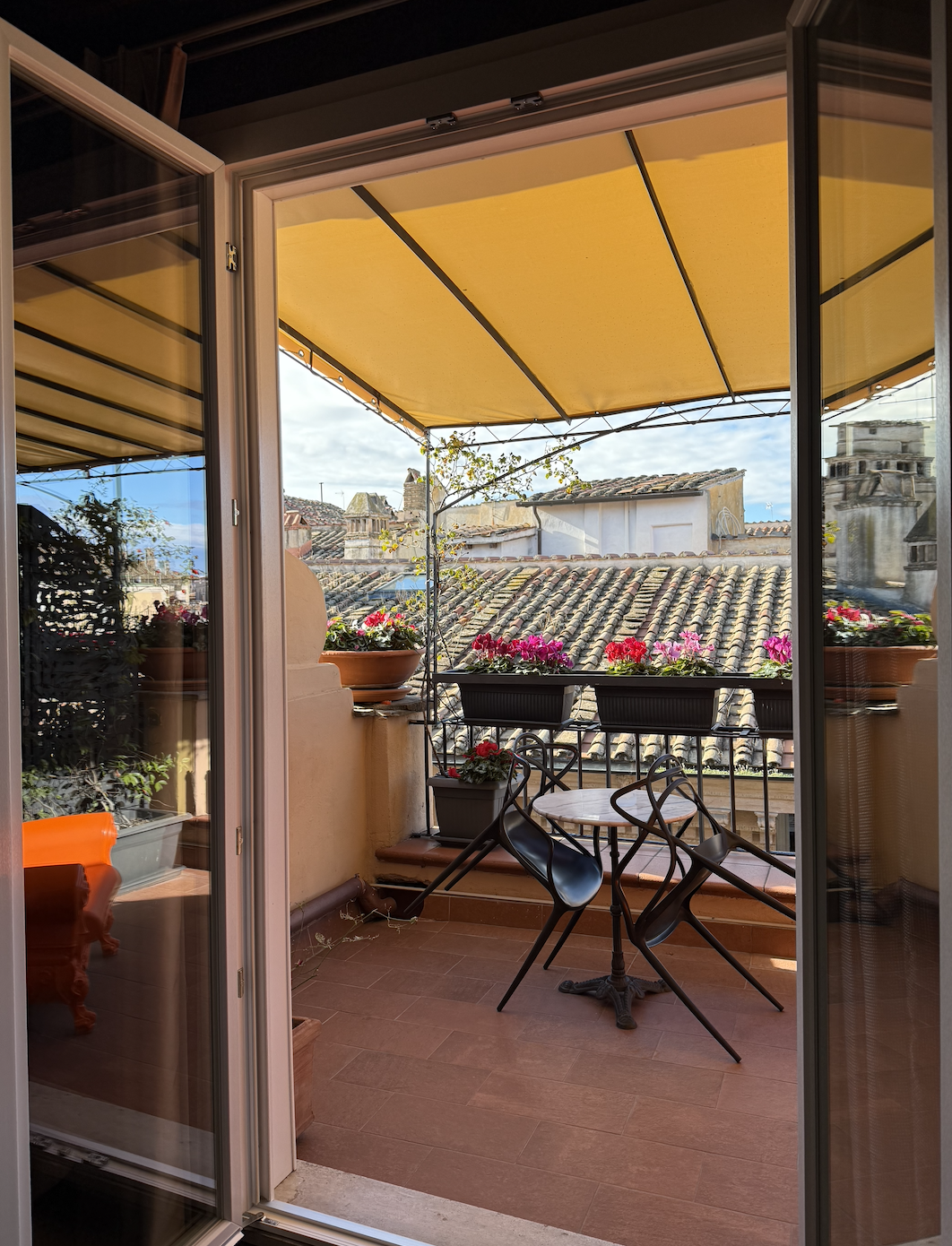
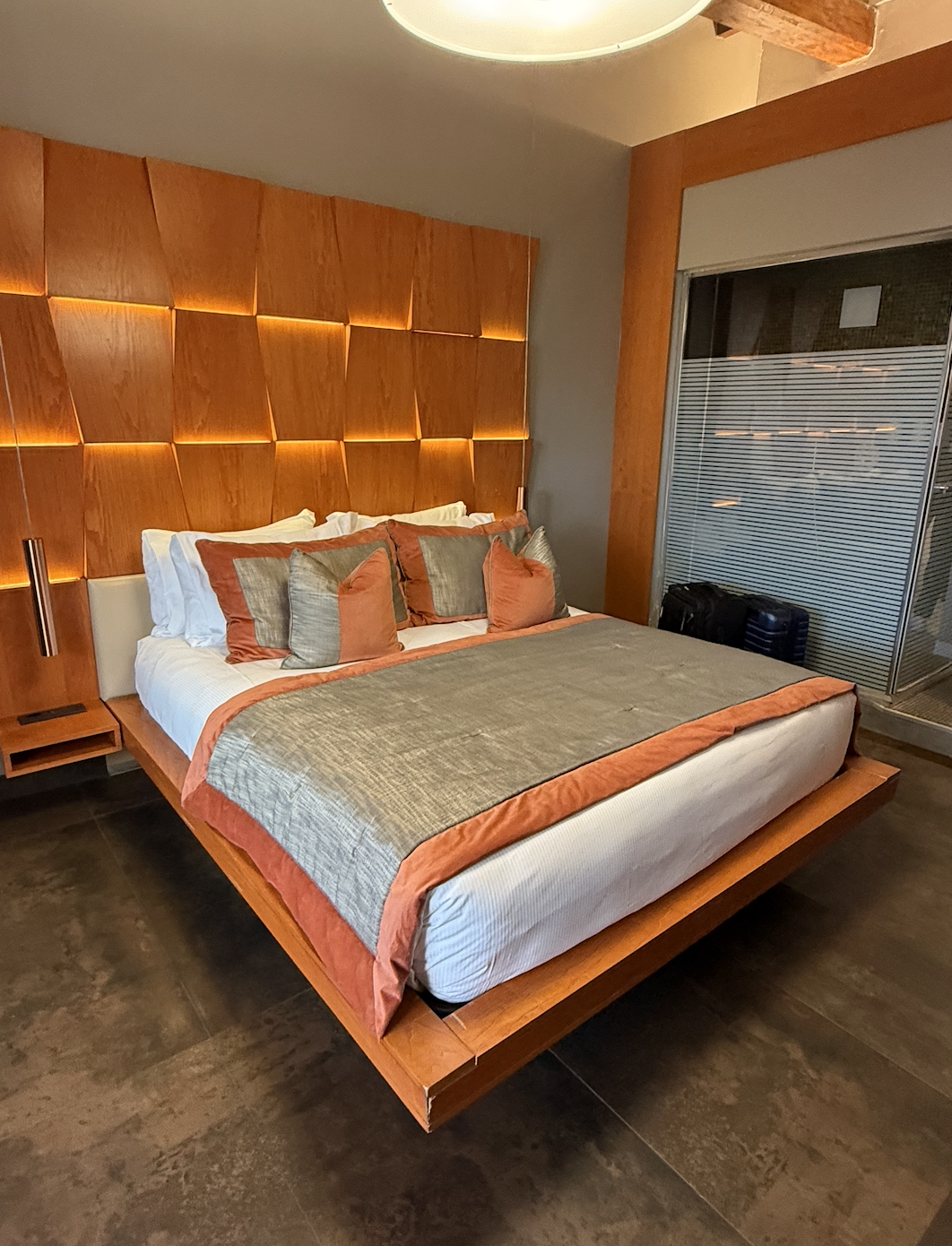
Ara di Martes is a 4-star hotel in a busy, shopping and tourism district. You will easily spot your favorite stores in this area. It was a short walk to the Trevi Fountain - it’s sort of sandwiched between Campo de’ Fiori and Centro Storico. This area is the best place to stay if it’s your first time in Italy and you plan to see the main sites. The suites appeared a little old based on the lobby, but I assure you the rooms were very nice and exceeded my expectations.
It felt more like an apartment building, but it had everything we needed and more (there was a sauna!). In case you want to check out a few more options, Hotel Barbieri , Hotel 55, Splendor Suites Apartments, and Tritone Top House were a few other hotels I considered.
In total, we spent about $350 per person on tours and tickets, $1100 total on hotels for 5 nights, and about $250 on food per person. There are definitely ways to cut down on costs, but you know…when in Rome.
Night One: Pasta la Vista, baby.
We had 4 full days in Rome and lots to do. Brennan and I landed on a late Thursday evening and had a dinner that deserves it’s own section.
It was already 6 pm when we landed and after ubering to our hotel, we were certain about nothing but our hunger. We randomly chose to eat at Colline Emiliane, a classic Italian brasserie with “traditional Emilian comfort food.”
But don’t be fooled by its modest appearance - this is a Michelin starred restaurant. We ordered the tagliatelle with mushroom (mushroom with pasta), prosciutto di langhirano (type of schnitzel), and erbazzone (spinach pie). It was freshly made, and the pasta-creating process was on full display just over our shoulders.
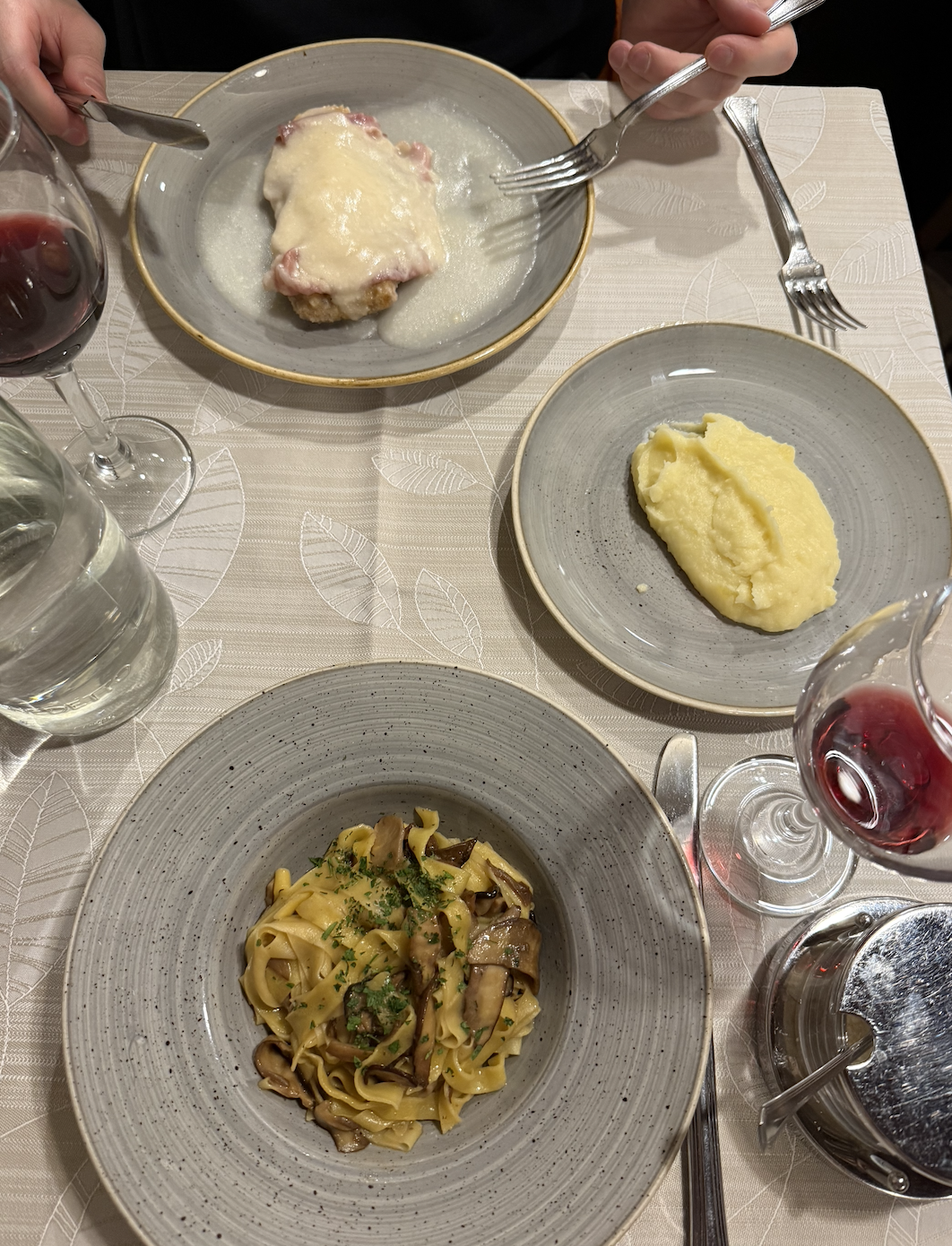
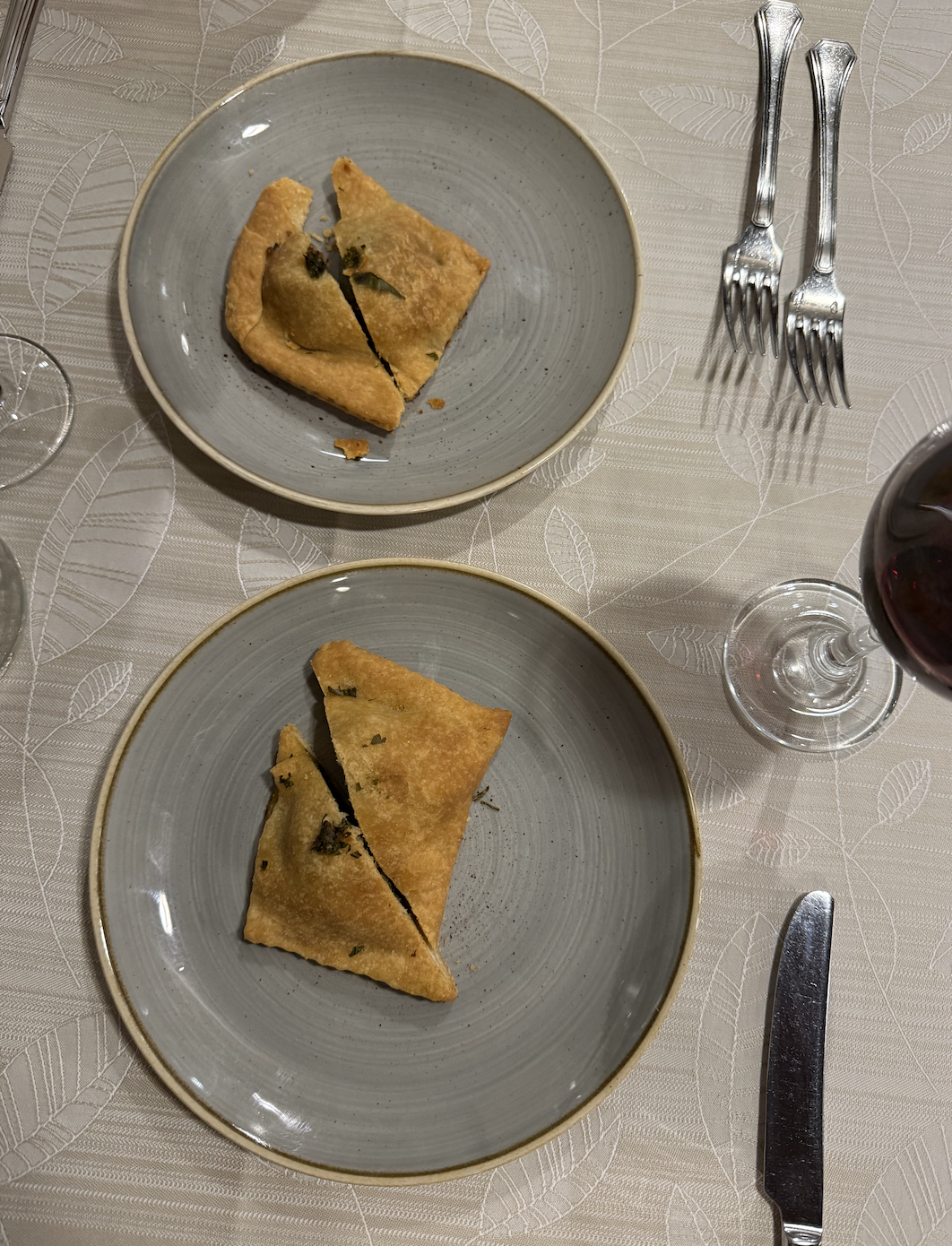
The place had definitely earned it’s star and our respect, and we were pleased to find the prices were more than reasonable.
By the time we got back to our hotel, it was midnight. In 7 hours, we'd be tackling Vatican Museum & Sistine Chapel, St. Peter’s Basilica, and a cooking class! It might not sound like a lot, but while Rome is walkable, the size of the city surprised me. You can expect to walk as far as 30-45 min from one side of town to another. My advice is to plan your activities each day by proximity to each other.
Day One: Count Steps, Not & Carbs
In the morning, we woke up and got ready for our Vatican Museum & Sistine Chapel tour at 9:30 am. It was more of a skip-the-line experience where the company gets you through security then says “okay, have fun kids!” I would’ve preferred a walking tour for more info, but it was also nice to go at our own independent pace (and cheaper).
We saw the most amazing paintings, marble sculptures and woven tapestries. As you may know, there are many, many depictions of “Madonna and Bambino,” or Mary and Baby Jesus. It gets a bit repetitive after awhile, but it’s impossible not to appreciate the realism and depth of the artwork.
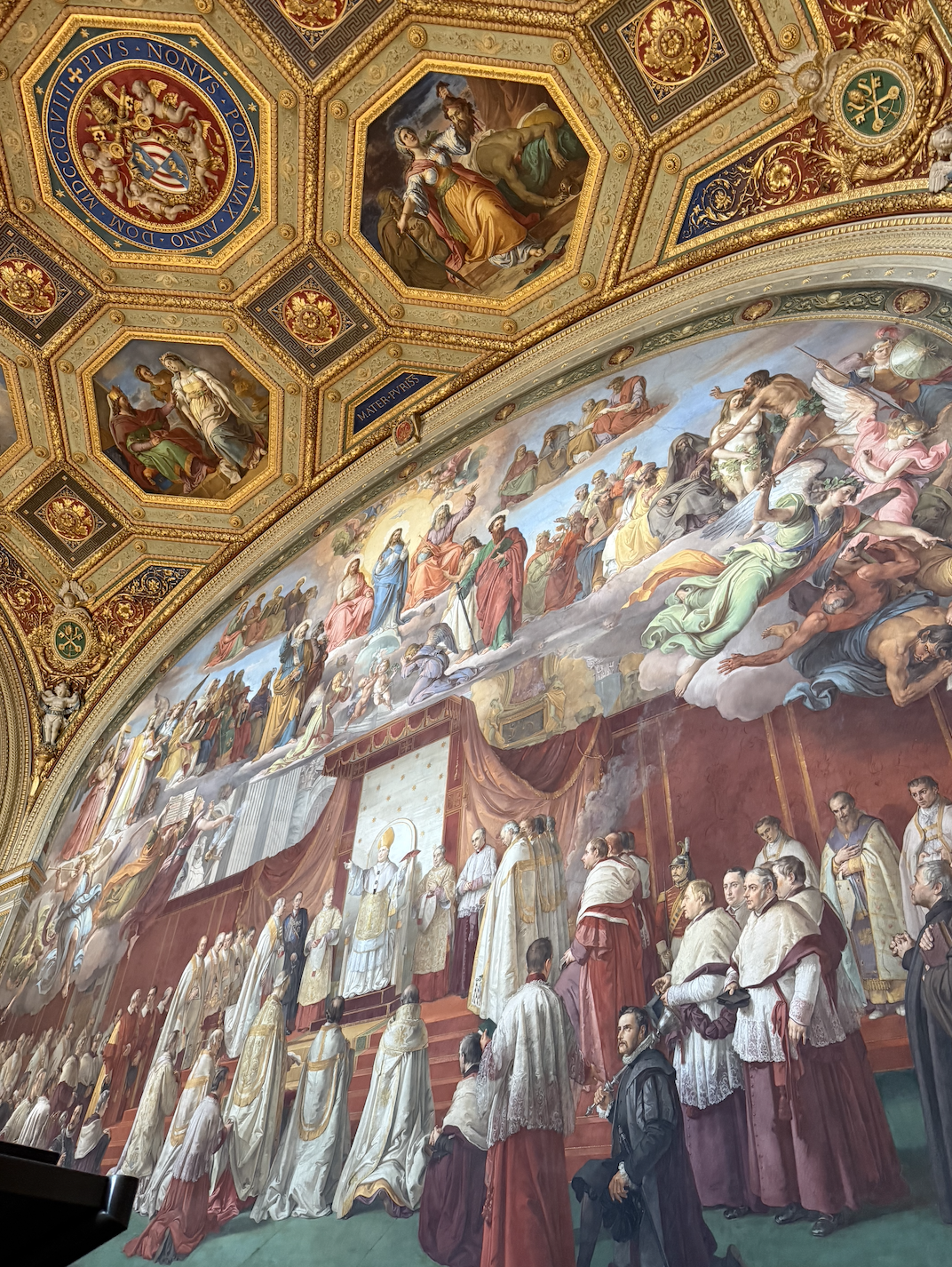
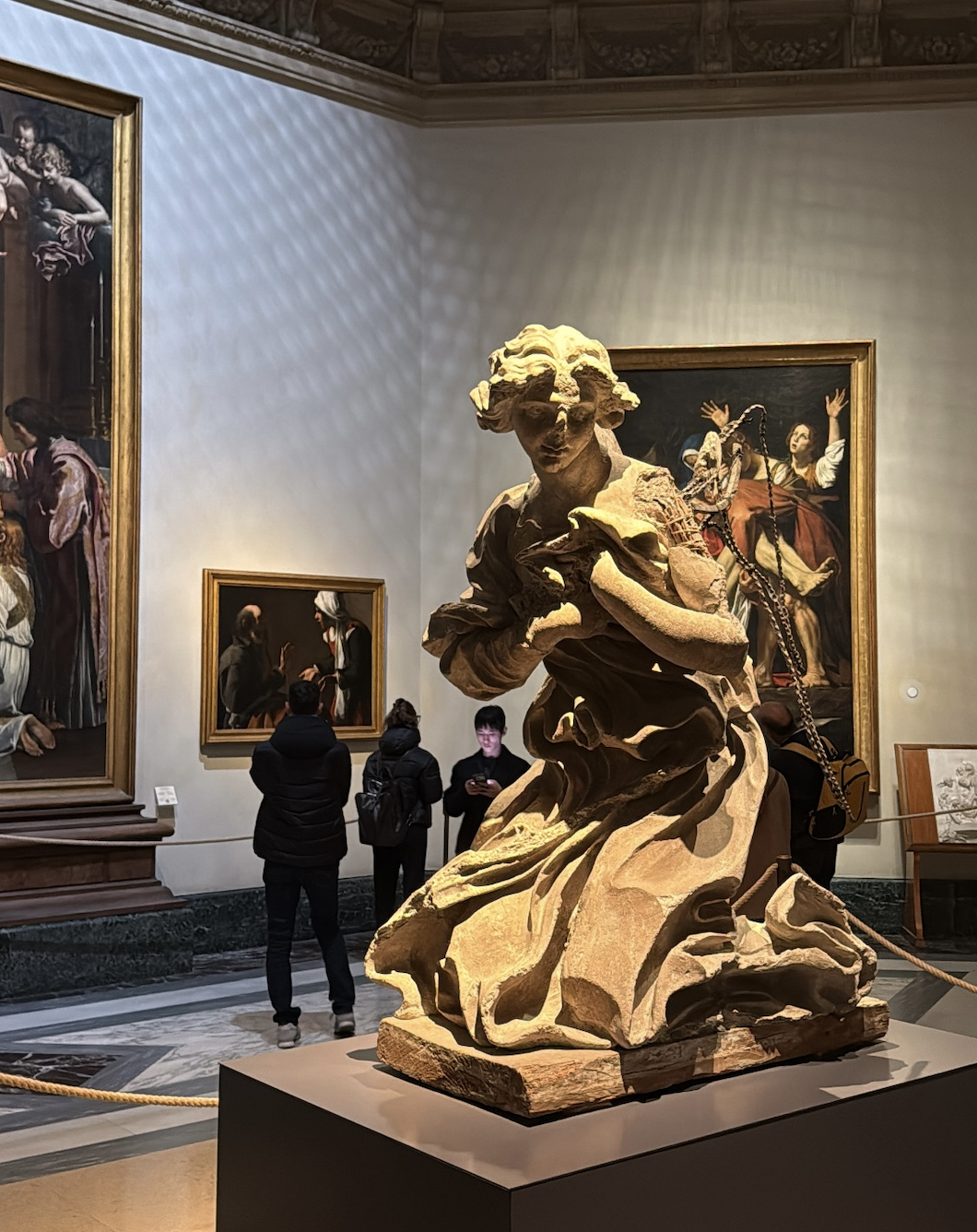
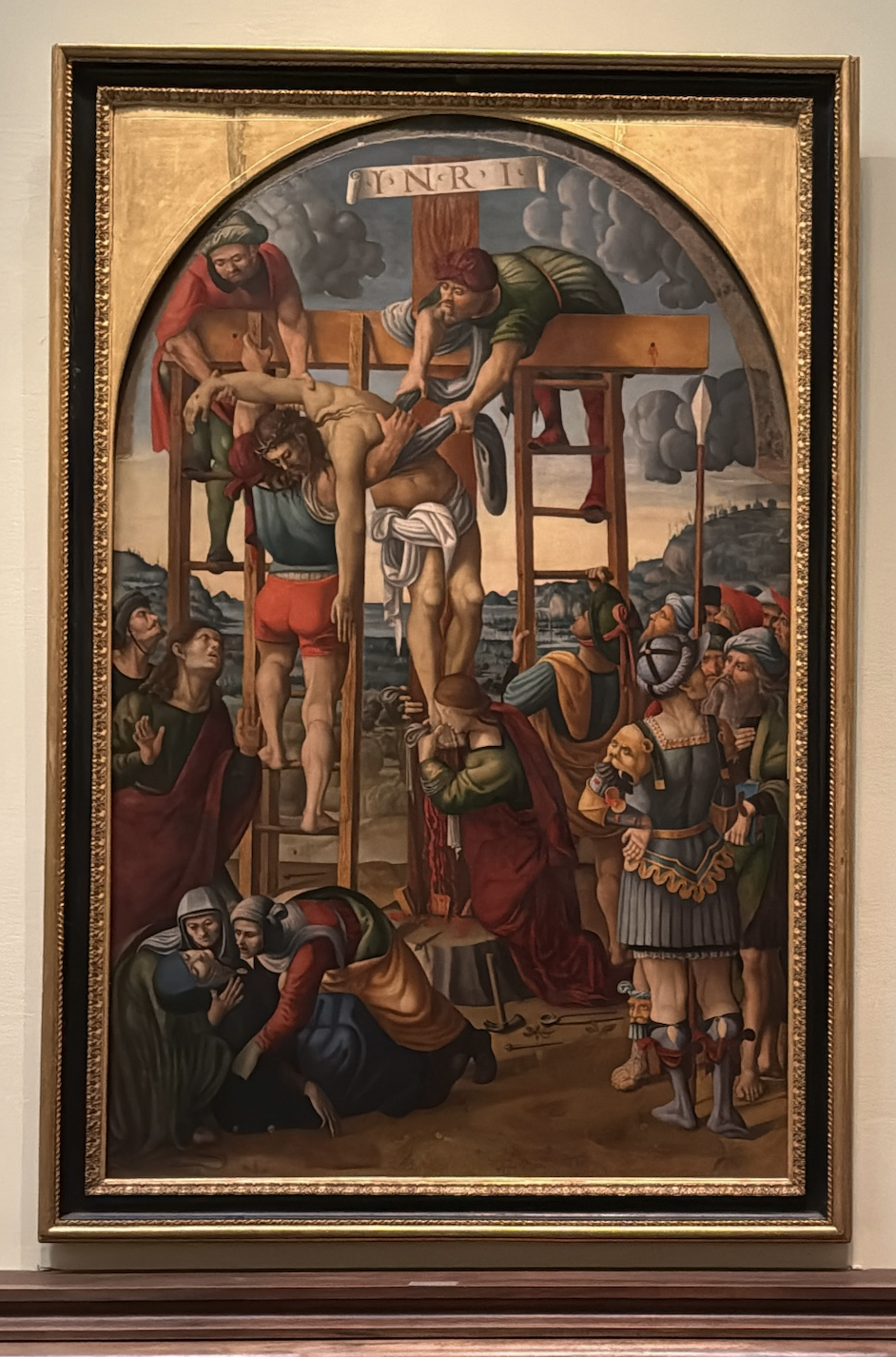
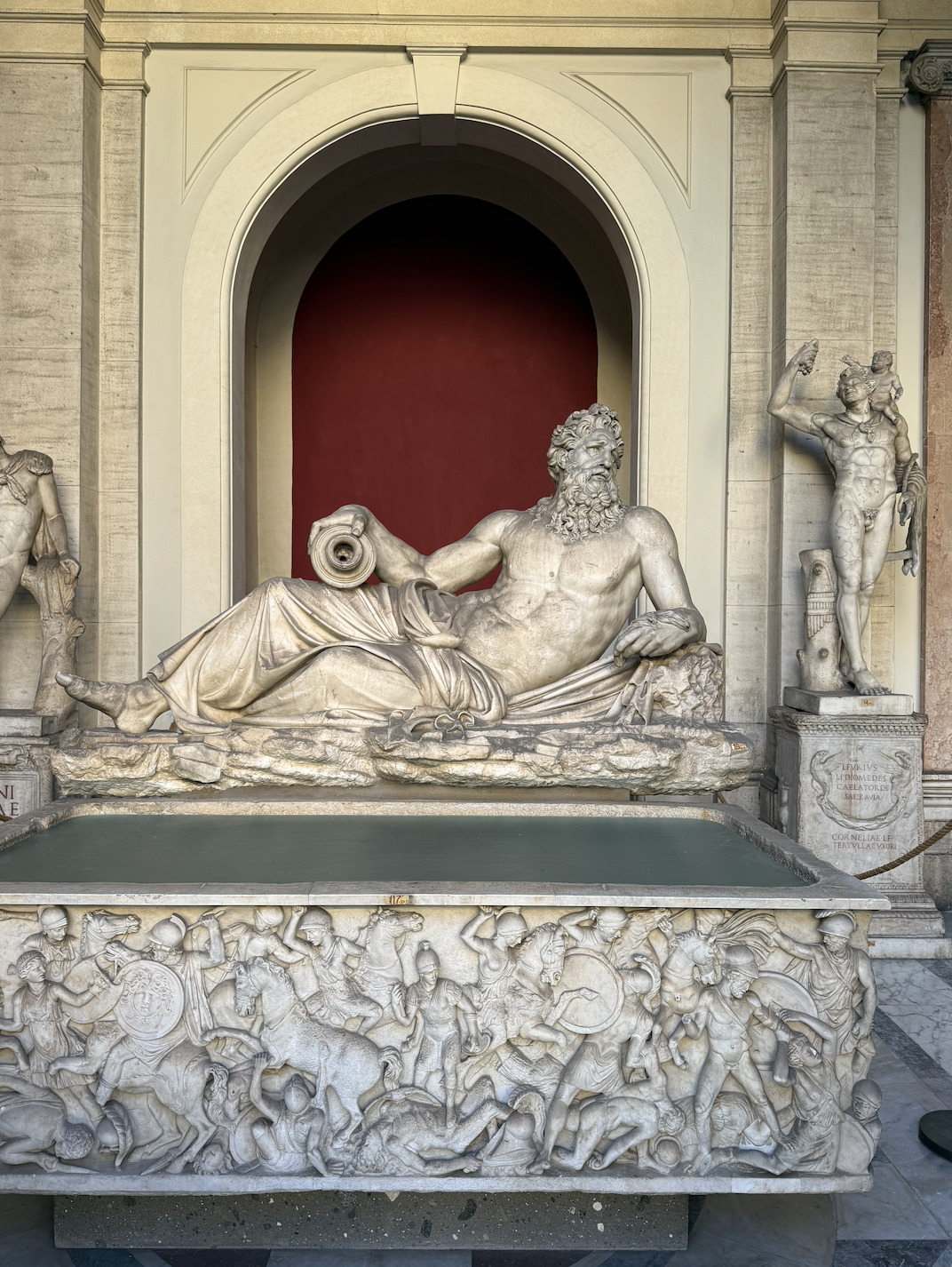
One of my favorite sections was a wide, long corridor that showcased hand-painted maps of Italy. It’s unbelievable how people alive back then figured out the shape and terrain of the land without a birds eye view.
The Sistine Chapel was the final destination of the tour and it was absolutely magnificent. Unfortunately, no pictures allowed.
Close your eyes and imagine very high ceiling and colorful paintings on the walls. The famous “God’s hand,” an iconic fresco of God extending his hand to almost touch Adam’s as he creates man, is at the center of the ceiling. From one end to another, you could make out a timeline depicting the biblical tales of man’s creation, sin and redemption.
Michelangelo, the artist credited for this, is said to have painted the ceilings lying down, which led paint to drip into his eyes and blind him over time. Any signs of being visually impaired were not noticeable in his masterpieces.
Following the tour, we were on the hunt for pasta. We went to Tonnarello (San Pietro location), which was highly recommended to me by friends and coworkers. Luckily, we got there just before a line began to form.
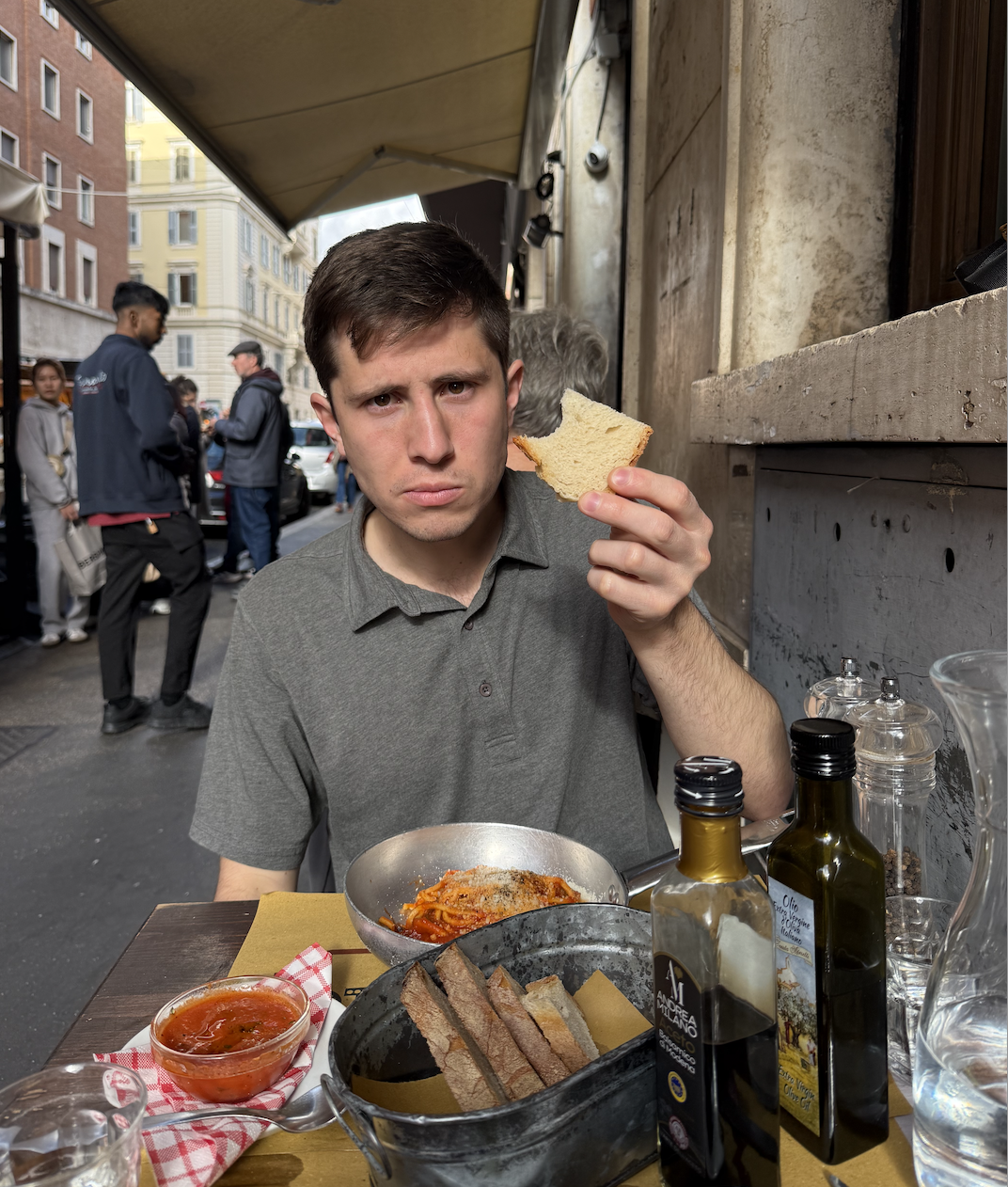
“Delizioso”
Brennan and I shared the Polpette (red sauce pasta with beef), Testaccio (salad with dried beef slices), and focaccia bread with marinara sauce. It was some of the best pasta on our trip!
Next stop: St. Peter’s Basilica.
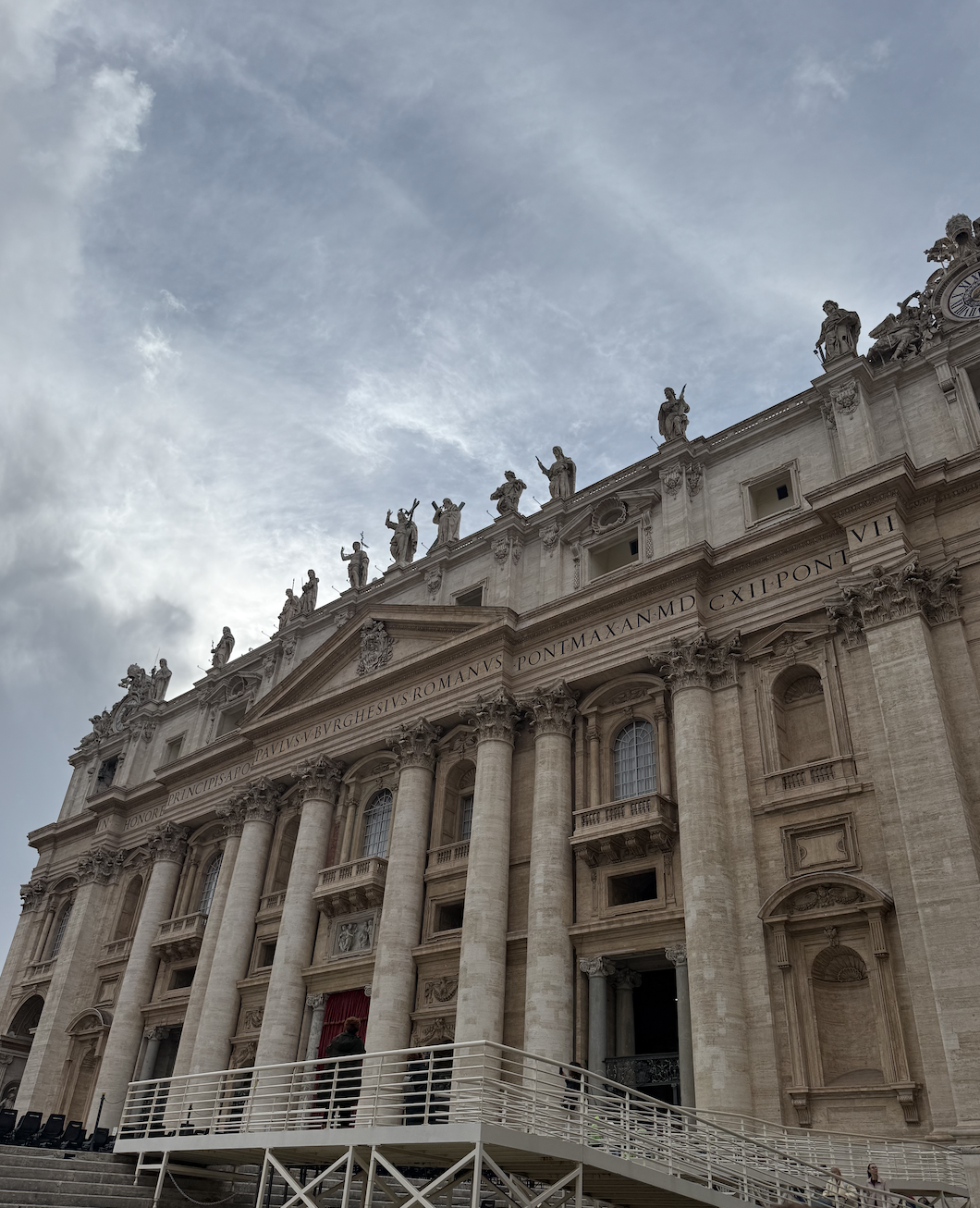
Holy basilica
Similar to the Vatican tour, our guide got us past the line, but it was also an independent experience. We actually started with the dome itself, where we went up dangerously steep stairs until we got to a walkway that outlined the interior dome. If you’re scared of heights, this will be a little daunting. We were able to walk around the inside of the circular dome from high up and peer down into the basilica’s interior.
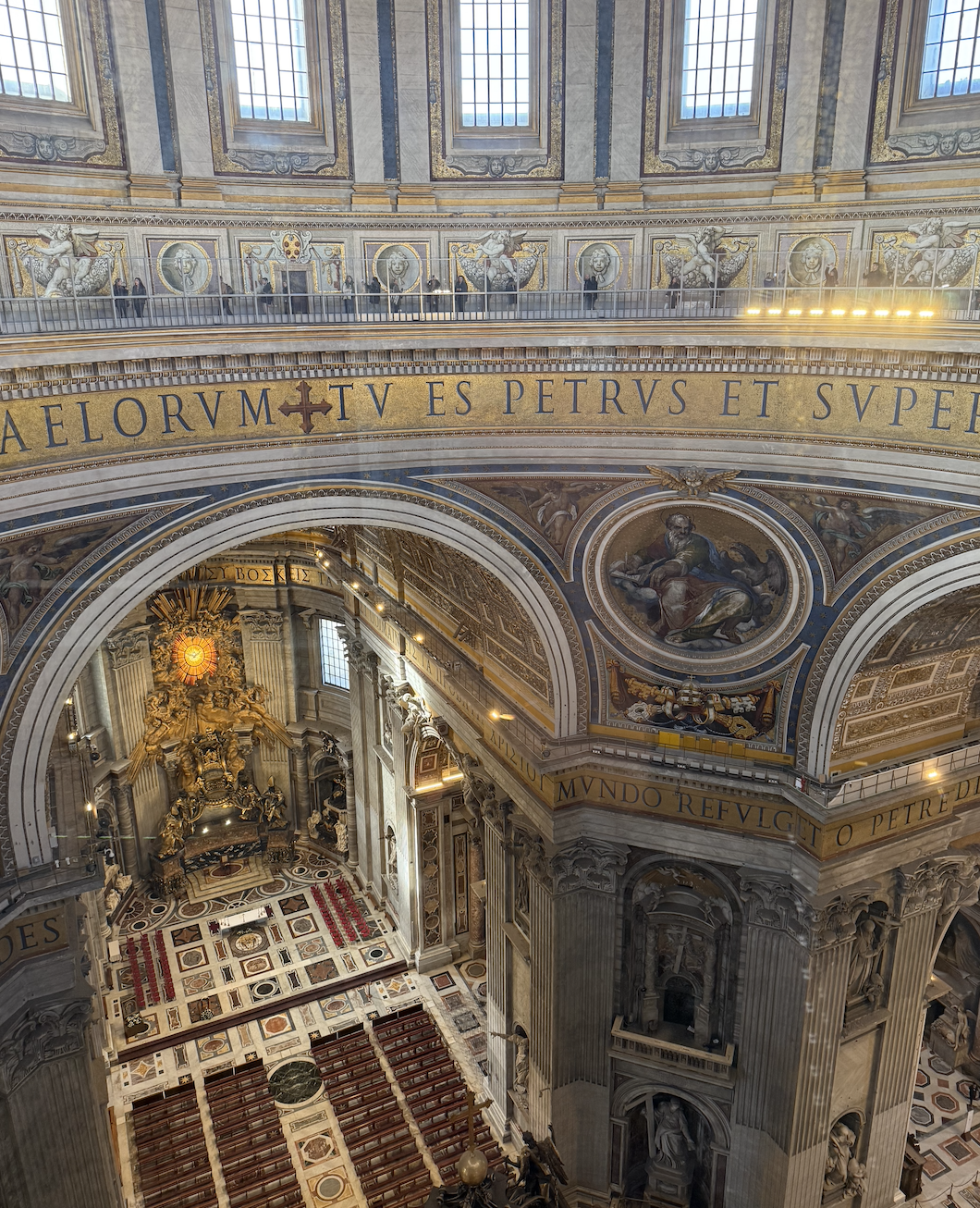
Don’t look down…
We climbed another set of narrow, slanted stairs that led to the outdoor balcony at the top of the dome. If you’re claustrophobic, beware: the stairway gets smaller as you ascend. However, the view at the top was worth it. The incredible panoramic view from the external side of the dome were incredible - you could see how vast the city was.
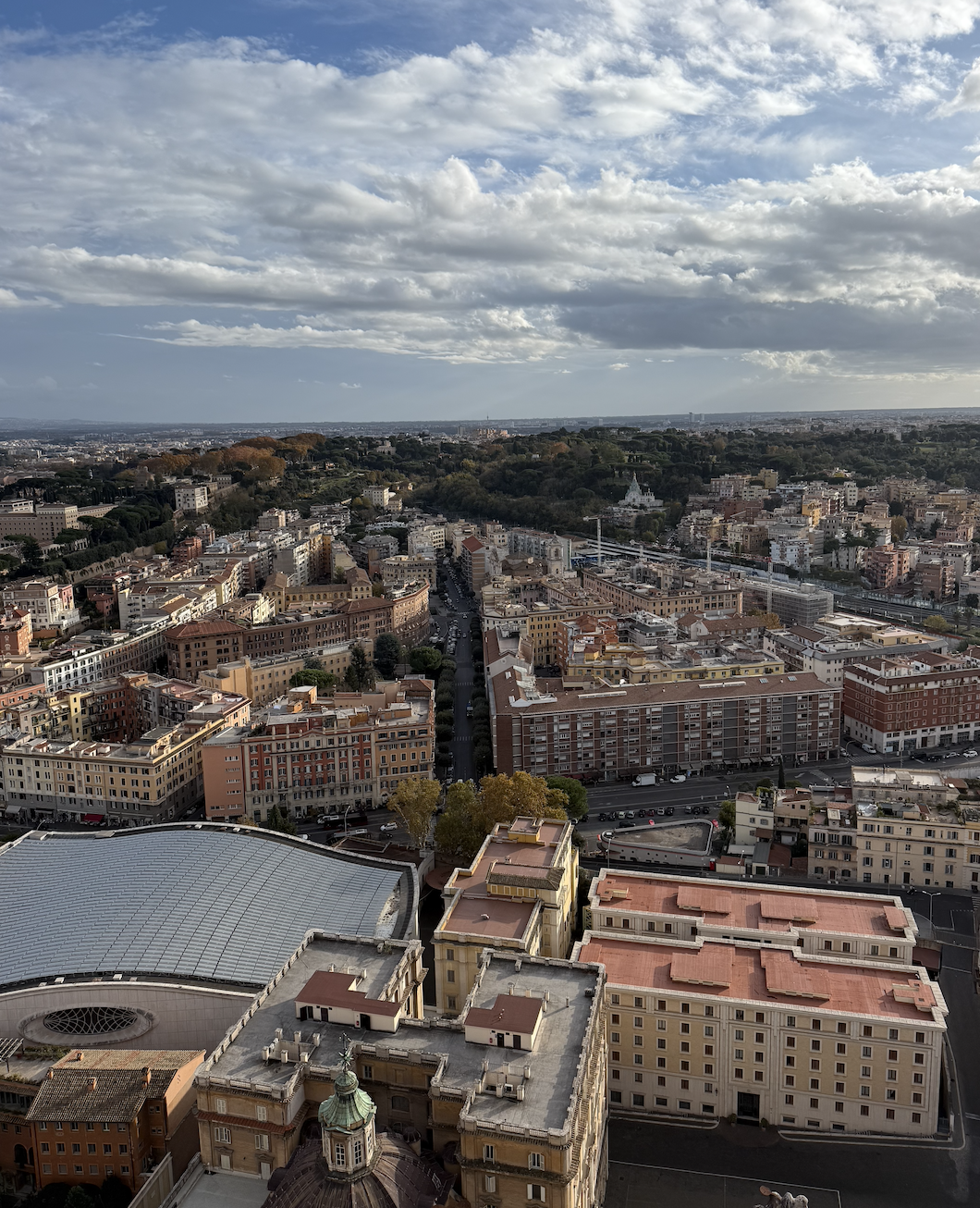
Panoramic views from St. Peter’s Basilica
After our tour, we were exhausted and had some time to rest before our Pizza & Tiramisu Cooking Class. We booked this through Viator with a company called Eat & Walk Italy. They also offered a pasta-making class which was happening next door!
If you’re looking for a hands-on experience and love food, this is a fantastic activity.
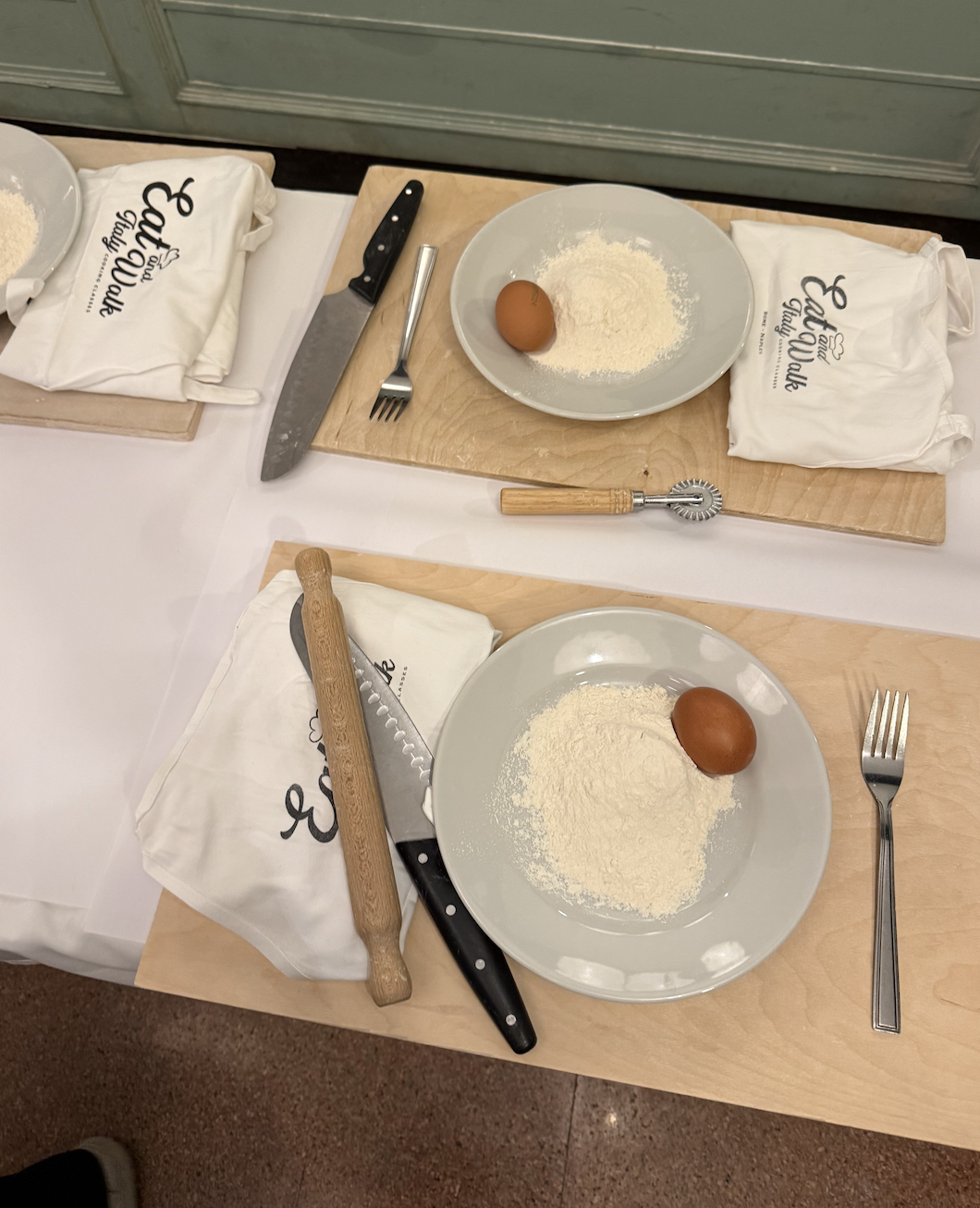
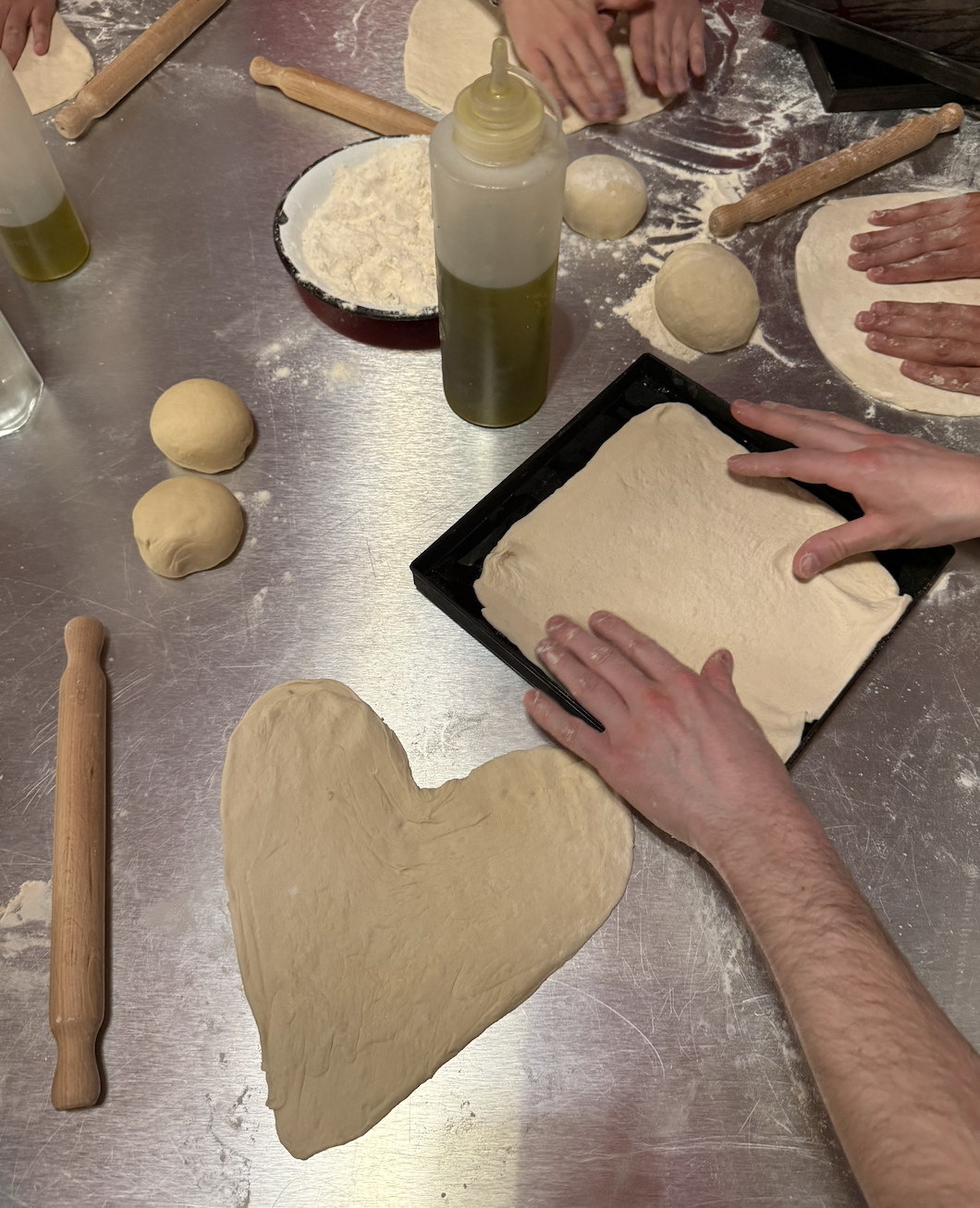
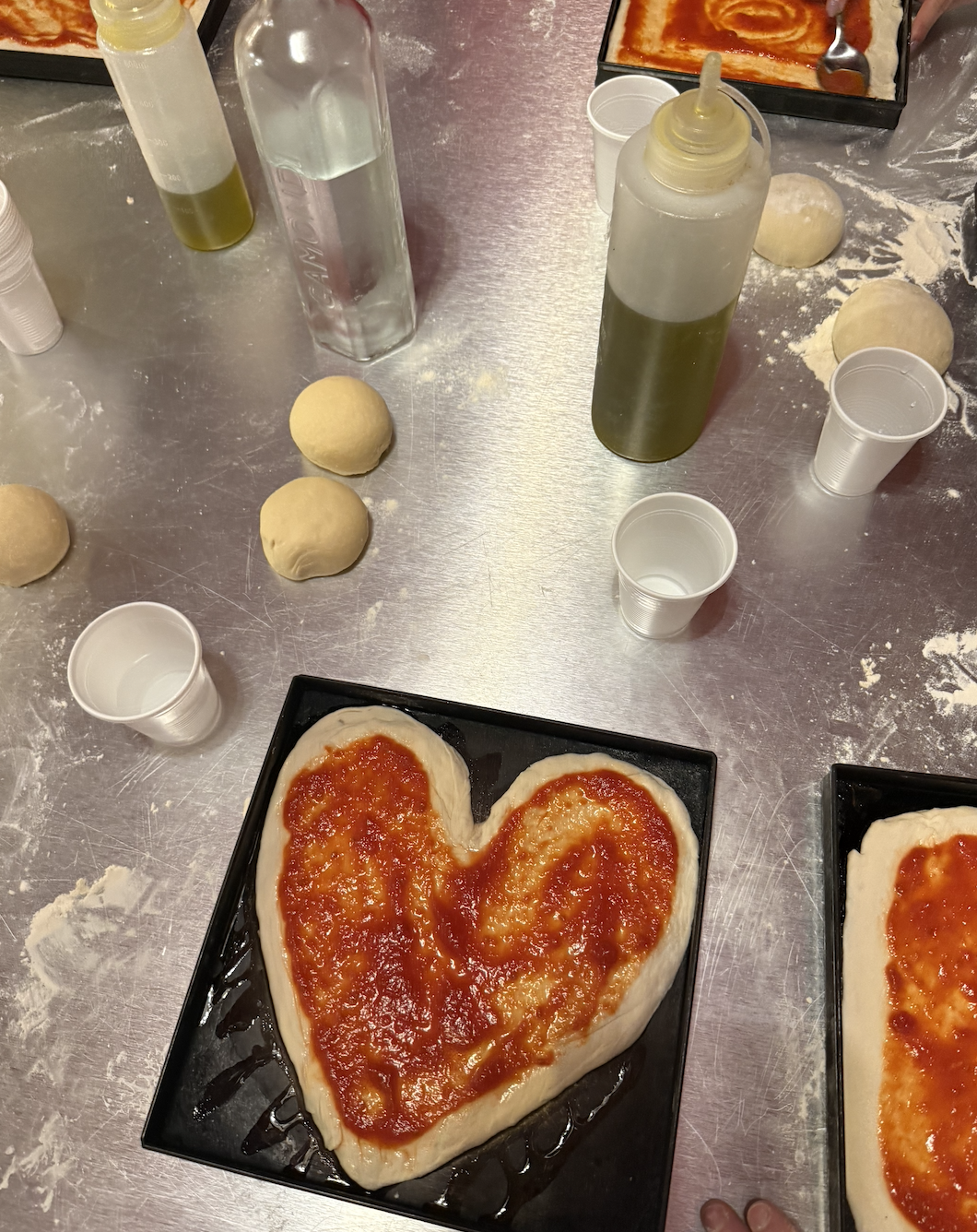
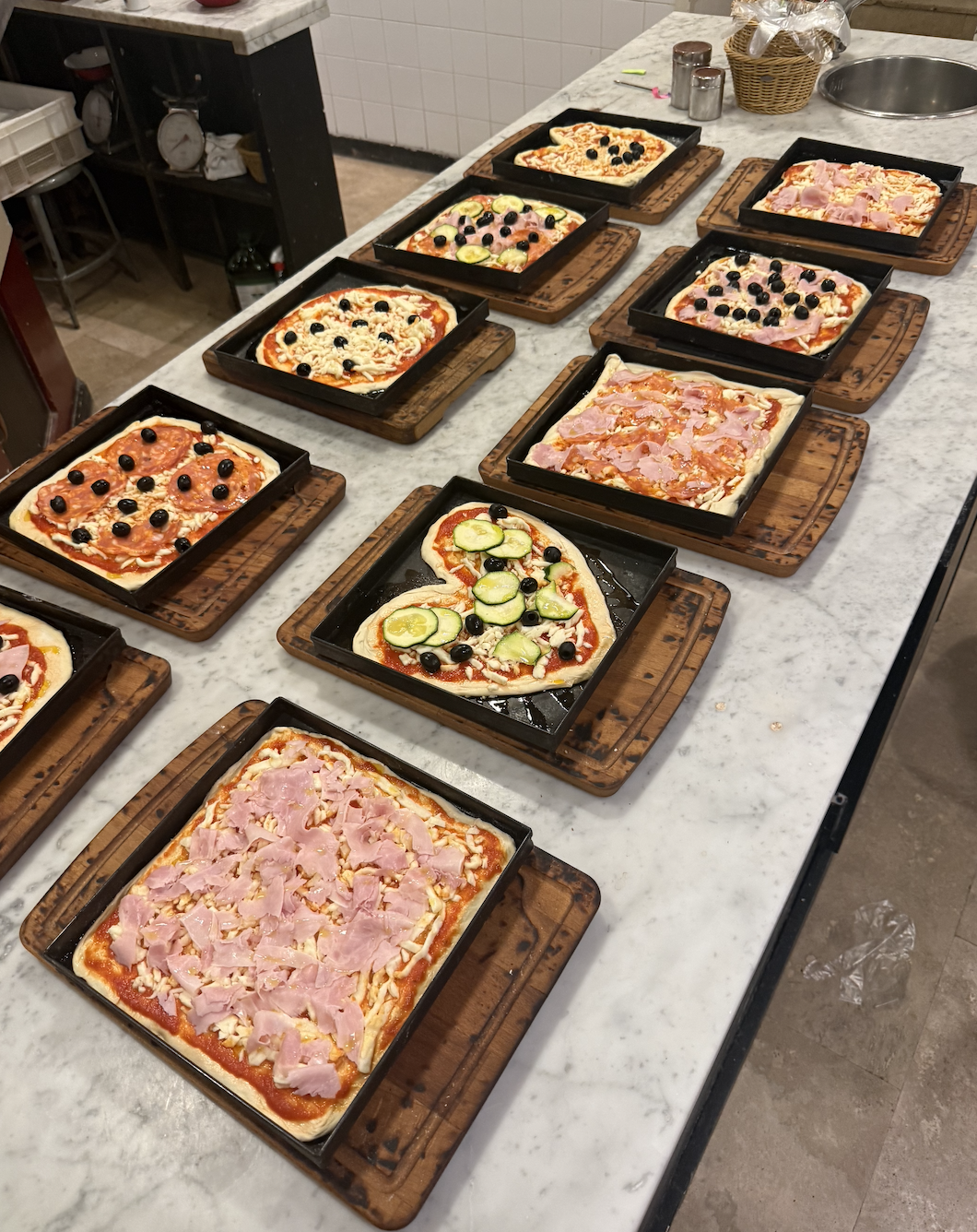
The “classroom” was actually connected to a real restaurant which we ate our meal in afterward. It was clean, organized and significantly well-run. We learned how to make our own pizza dough, decorated our own pizzas, and also learned to make tiramisu from scratch! It’s one of the best cooking classes I’ve ever done.
We surely had a nice food coma and a deep sleep that night.
Day Two: Holy Ravioli & the Roman Ruins
The next morning kicked off with a visit to the famous Pantheon. We picked up our audio guides, provided by OhMyGuide, then walked to the already packed Pantheon. We actually spent a good amount of time here despite it being a single room. The religious site, once attributed to the Roman pagan gods, was now evidently a Catholic site.
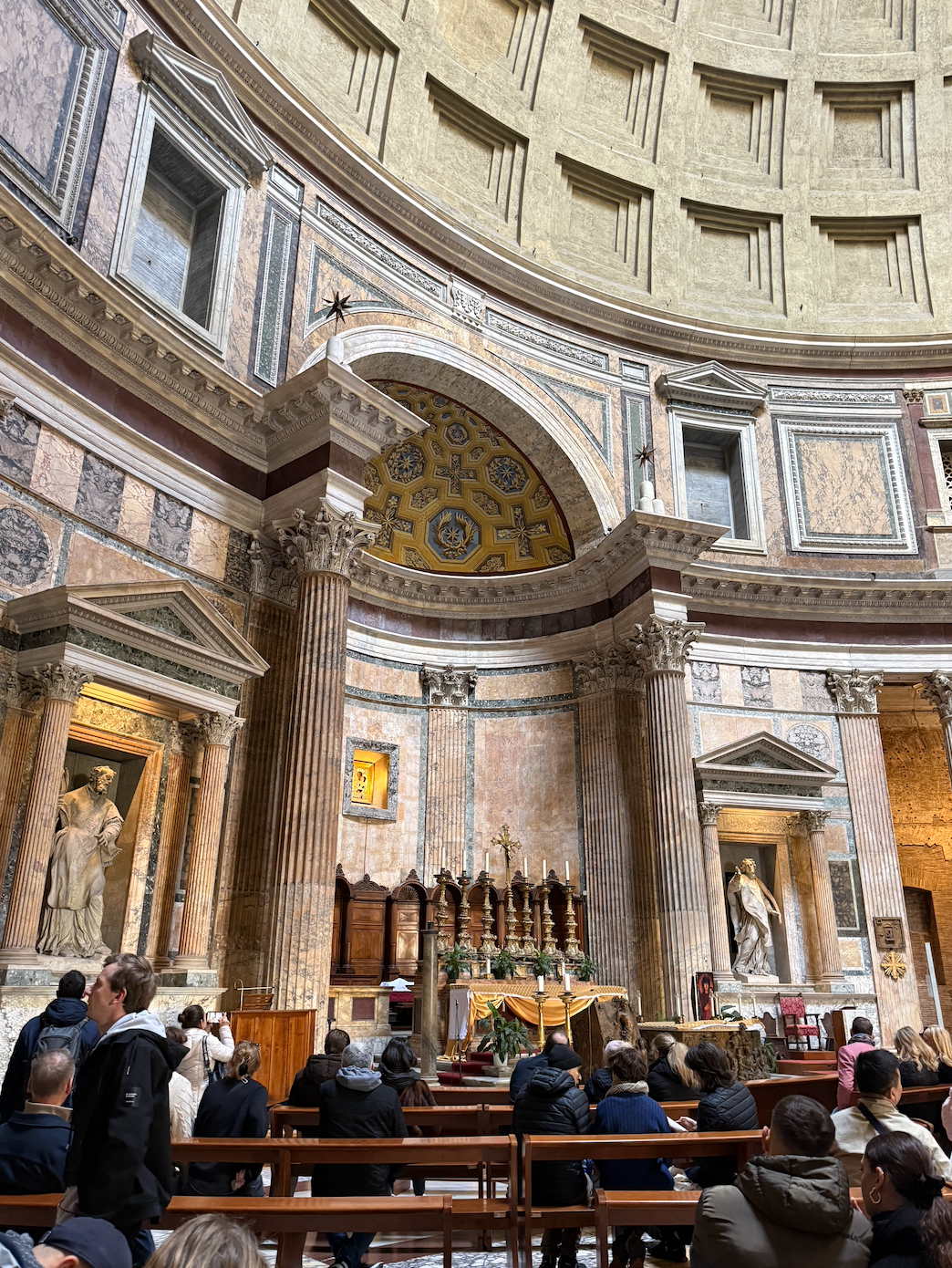
Inside the Pantheon
Because there’s a circular opening at the tippy-top of the dome, the rain from earlier this week had fallen through, leaving the center of the floor wet. This design was intentional to bring the people “"closer to the gods above.“ The floors curved upward in the center so water would drain from the center toward the surrounding walls. It was truly an architectural wonder.
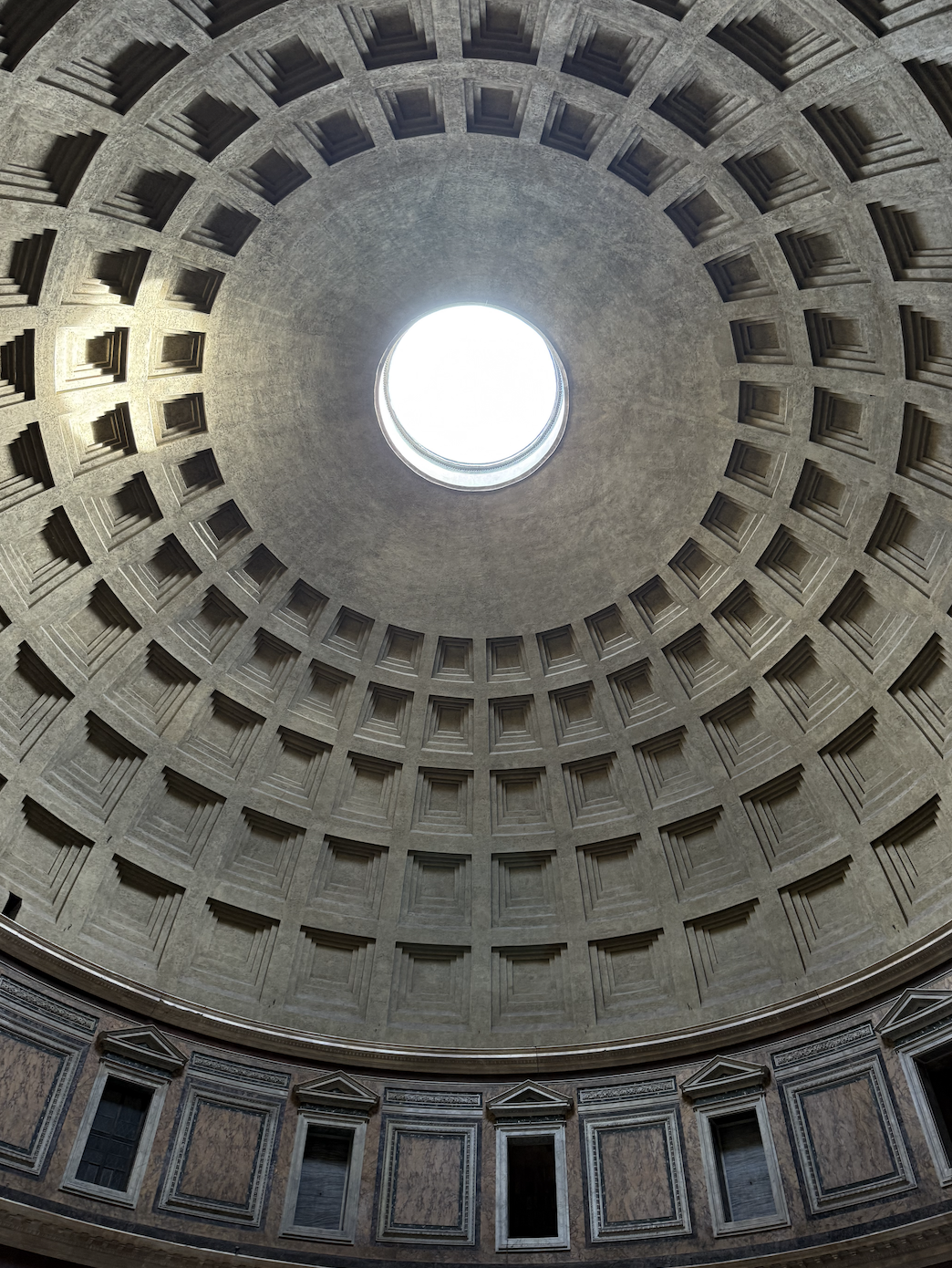
The window to the gods
Near the Pantheon, there was a busy little cafe called Cafe Tazza d’Oro. I especially loved this coffee shop for it’s retro decor, and the coffee was just what I needed that morning. The menu had way more options than you’d expect to see at any cafe. They proved there is apparently more than one way to make a cappuccino.
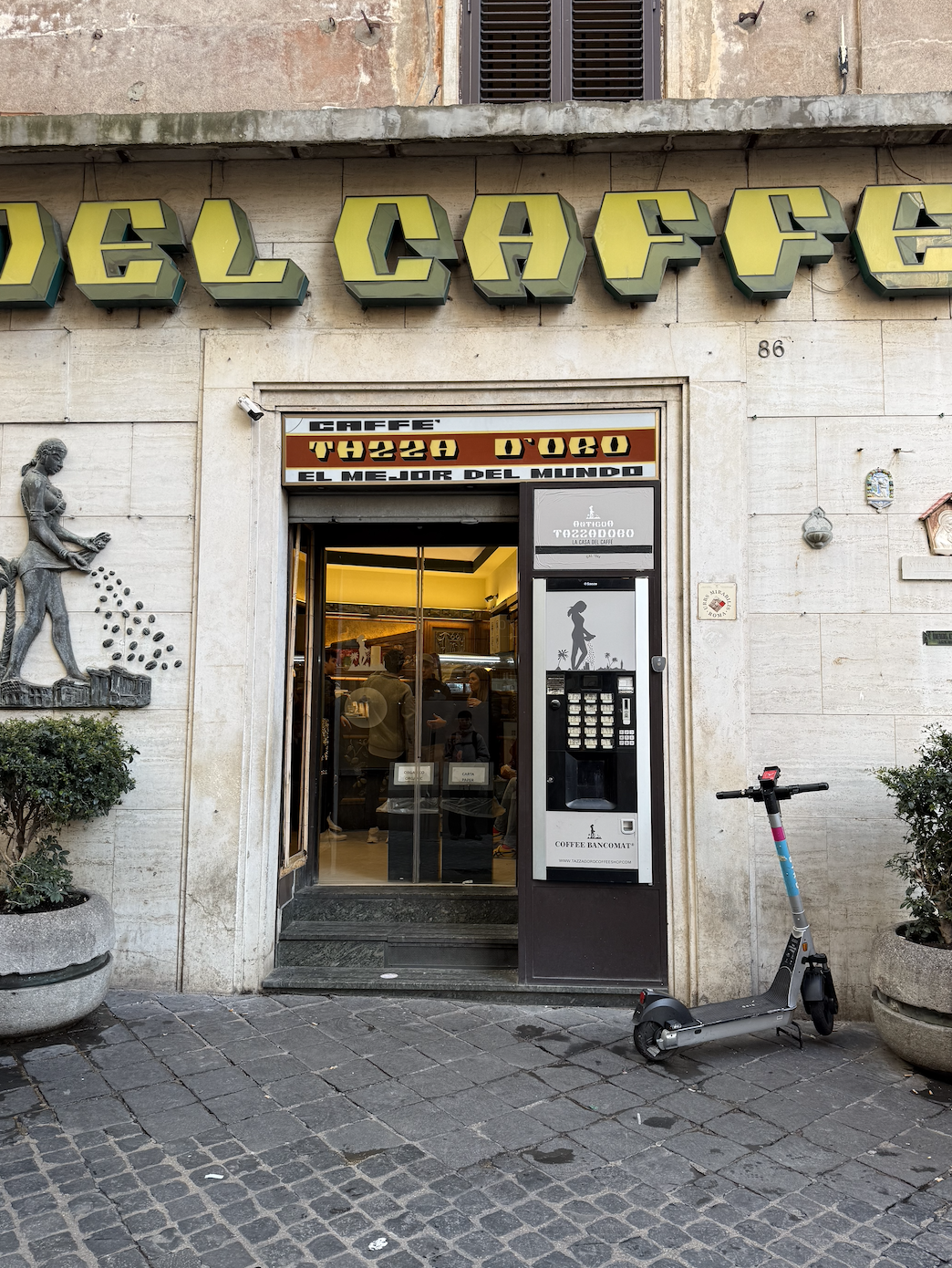
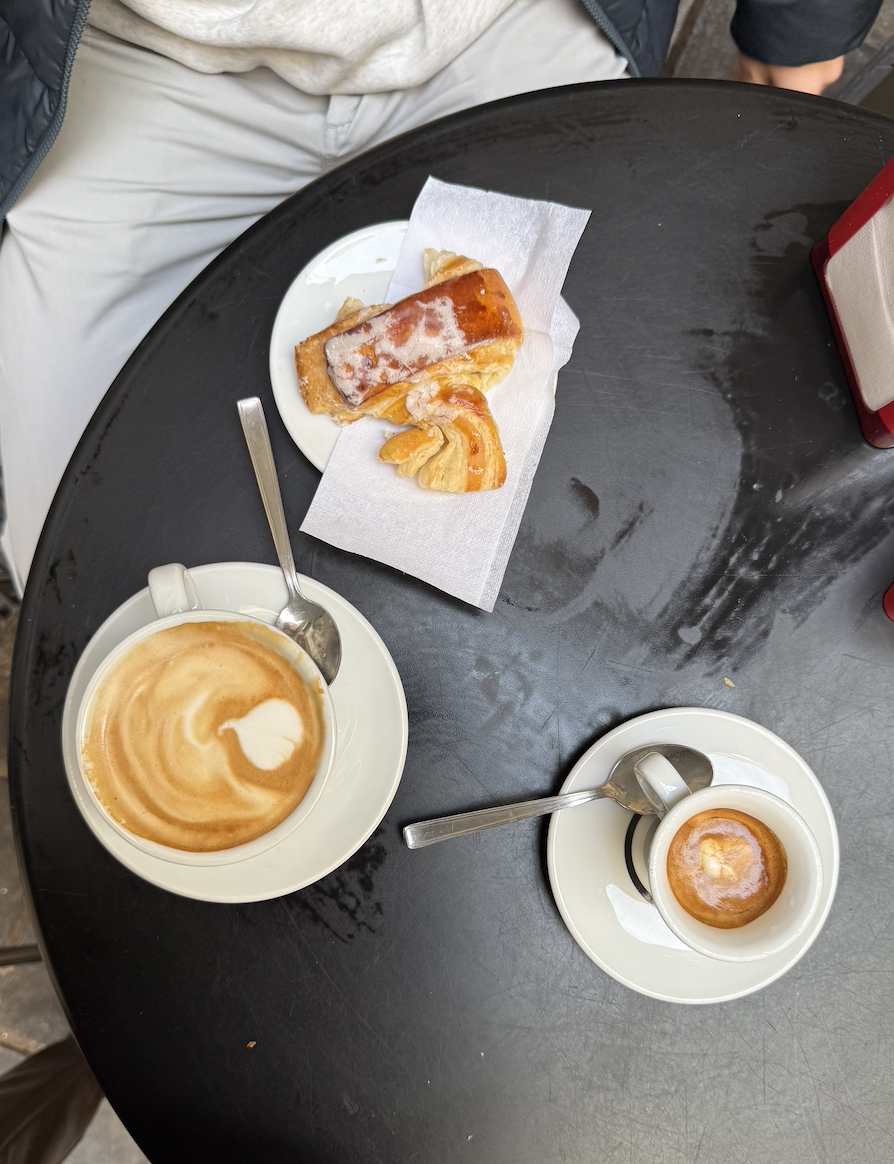
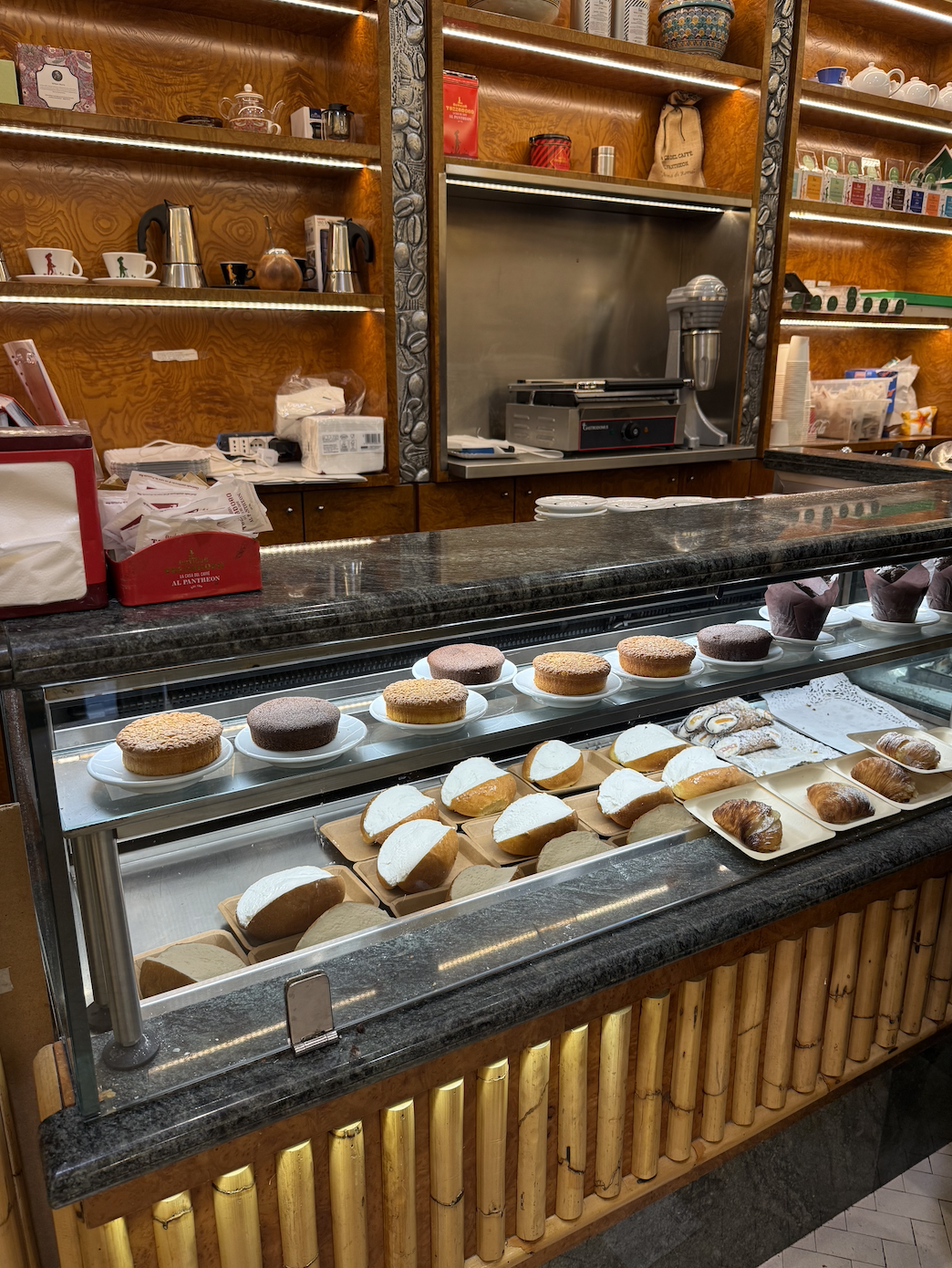
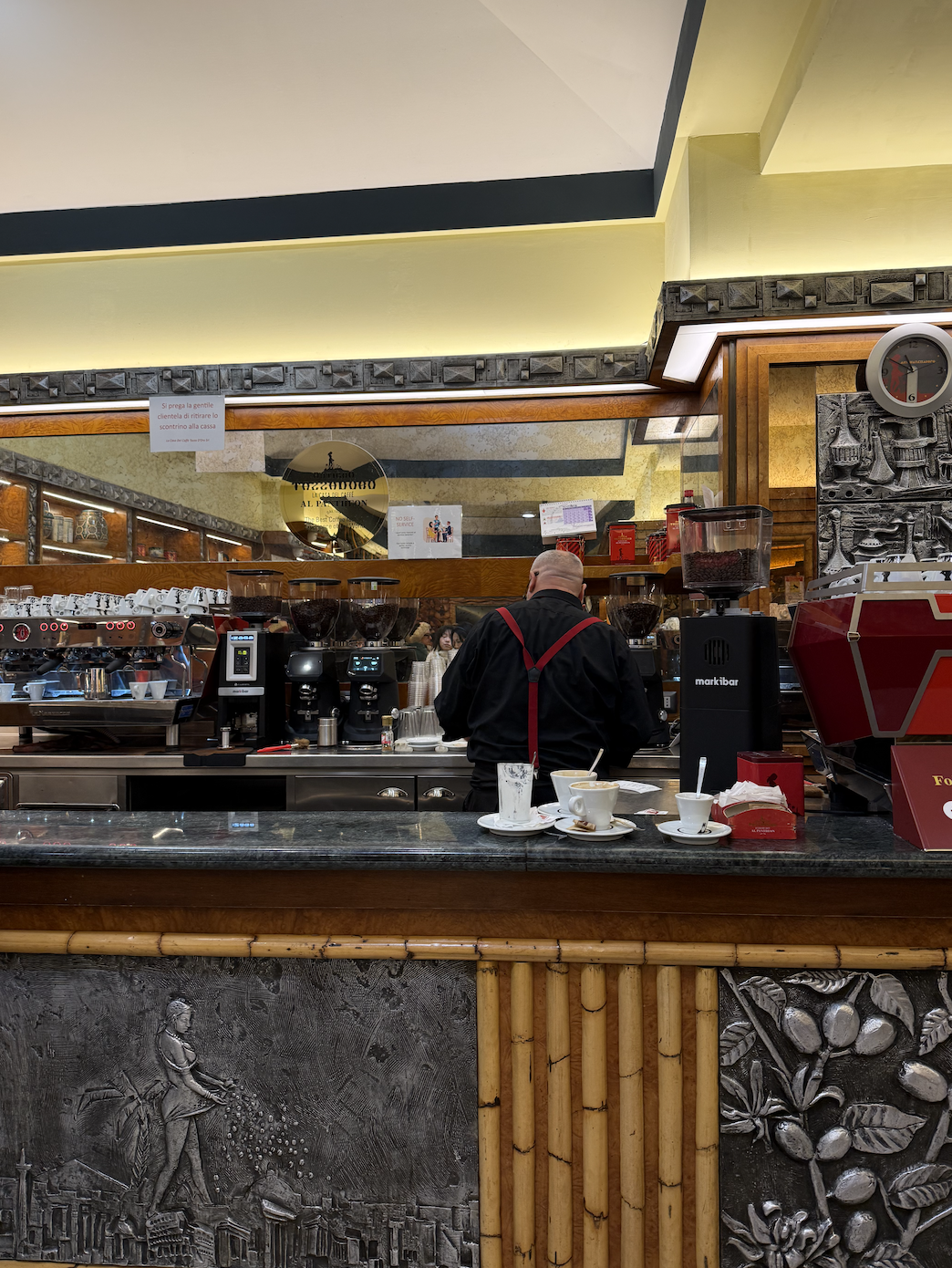
We ordered at the register, got our ticket and handed it to one of many baristas who concocted our drinks. Interestingly, the tables outside require a fee to sit at, but most people stand at the bar and enjoy their food and drinks anyway. The cafe had a growing line - a testament to it’s great coffee!
I took one sip of my drink and sang, “Ballerina cappuccina - mi mi mi miiiii.”
“Okay, I need real food,” Brennan complained. In quick effort to avoid a hangry boyfriend, I led us to the Campo de’ Fiori market, recommended by our friends, for a quick bite.
The Campo de’ Fiori market likely resembles that of your favorite farmers markets - with the exception that most vendors sell pasta and limoncello in addition to produce. Though there weren’t as many street food vendors as I hoped, we got good deals on packaged pasta and souvenirs to bring back home!
The market sits in Campo de Fiori Plaza with bustling restaurants and bars. Some notable mentions are Osteria da Fortunata, Il Baccanale and Mariuccia, all well-reviewed for their pizza and pasta. We dined at a gastropub called Il Baccanale, which served all your Italian favorites.
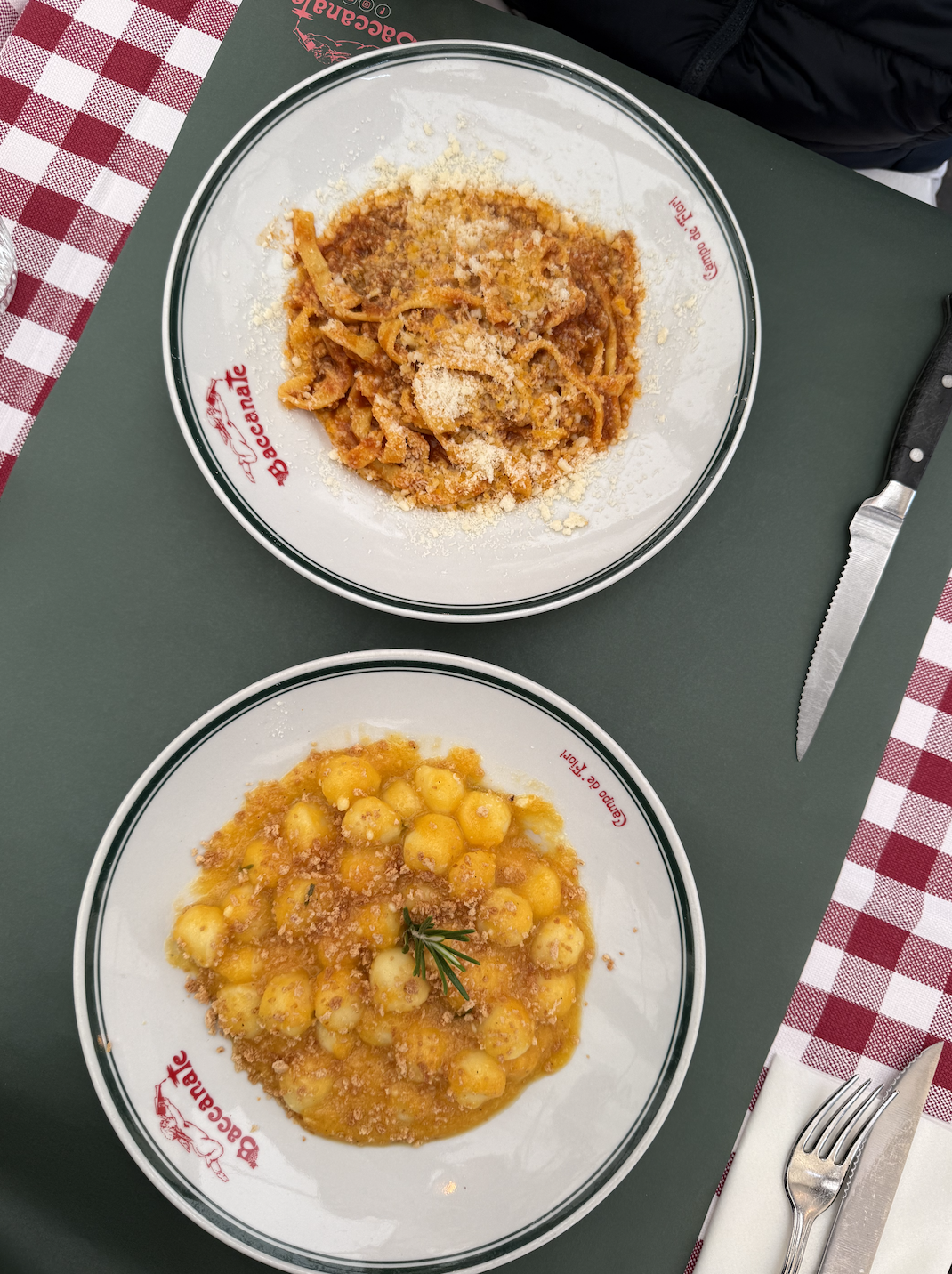
Bolognese pasta & butternut squash gnocchi
The bolognese pasta Brennan ordered was delicious, but I didn’t love my butternut squash gnocchi. I’m not sure what my review of Ill Baccanale is since I may have just ordered the wrong thing.
After, we rushed to our meeting point for the Colosseum, Roman Forum and Palantine Hill Tour, on which we enjoyed 3 hours of educational yet engaging content from Lorenzo, PHD student in history. He and Brennan rubbed elbows about the life of a PHD student.
He guided our crew through the ruins of the Colosseum, teaching us about its construction, the games, and even the audience that attended. The structure was surely incredible with its robust walls, towering height and precise symmetry.
In a few years, it’s rumored that the Colosseum will be used to host events such as concerts and raves.
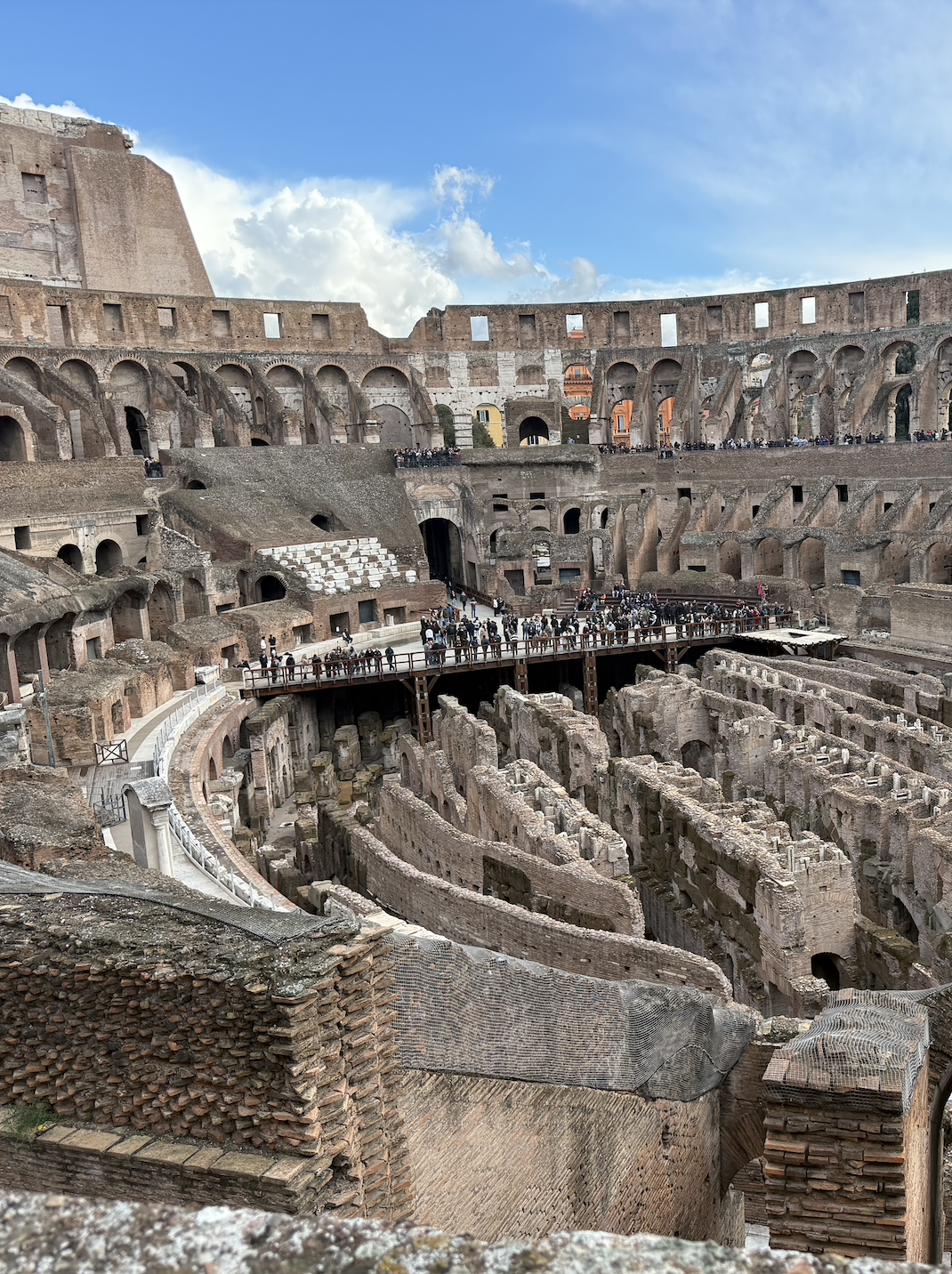
Can you actually imagine a rave in the Colosseum?
If you haven’t watched the Gladiator movies, you may not have a clear picture of what the Colosseum games were like - wild animals and men alike would fight to the death, some doing it for a living and others as punishment. The Colosseum was also filled with water to imitate battles on the sea. And when it wasn’t being used for games, the Colosseum held public executions.
Lorenzo explained the different methods of torture and killing that took place in the Roman Empire. One of which I recall is putting a human in a sack bag with various animals (cats, wolves, snakes, etc) and throwing the bag into a river. The animals would thrash and scratch while drowning, causing the human to suffer from painful scratches as they drowned. Boy, were those Romans creative.
Our guide led us to the Roman Forum next. It’s sort of like the “Times Square” of ancient Rome. This was a place where daily business, public announcements and trials took place.
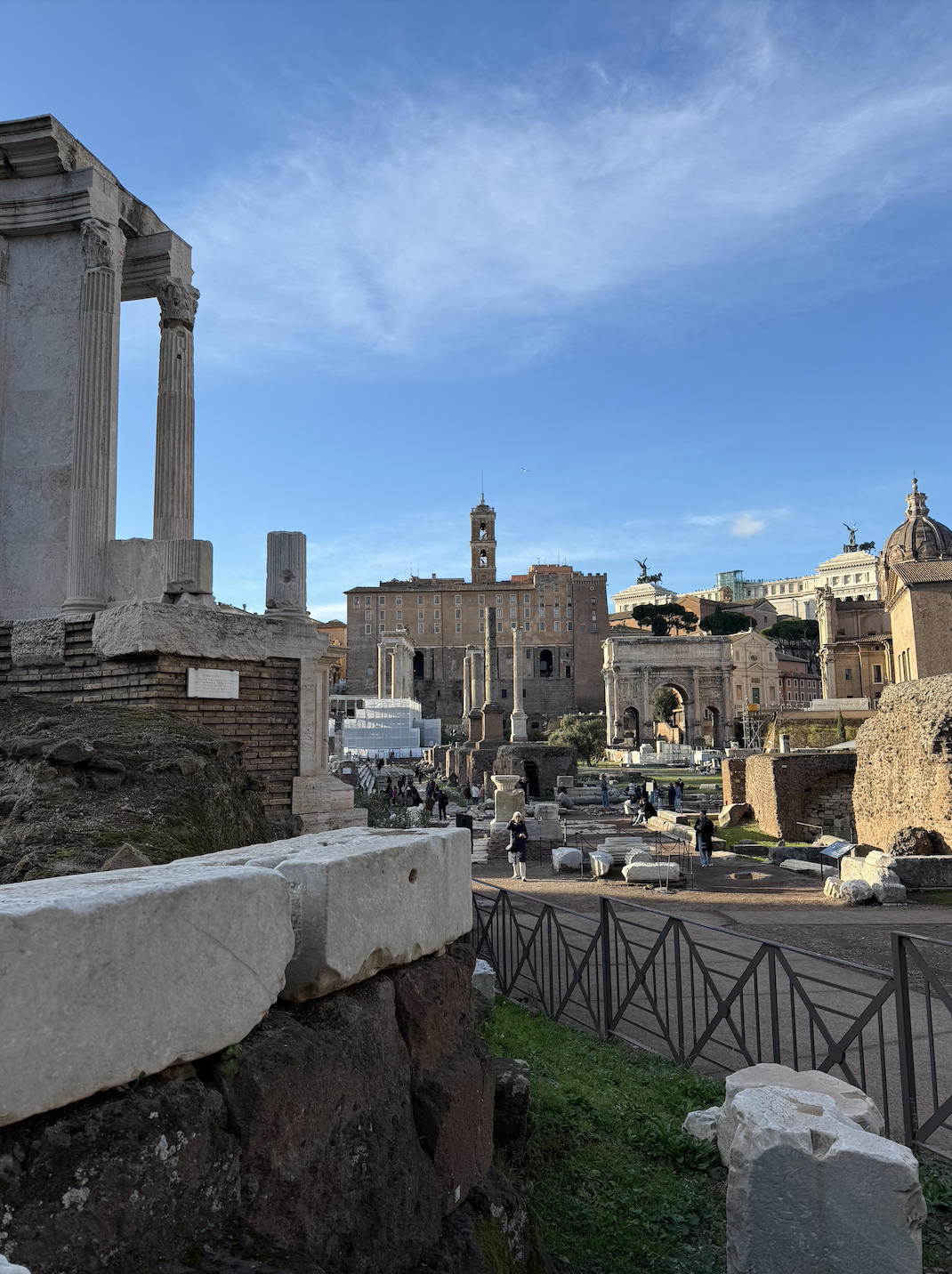
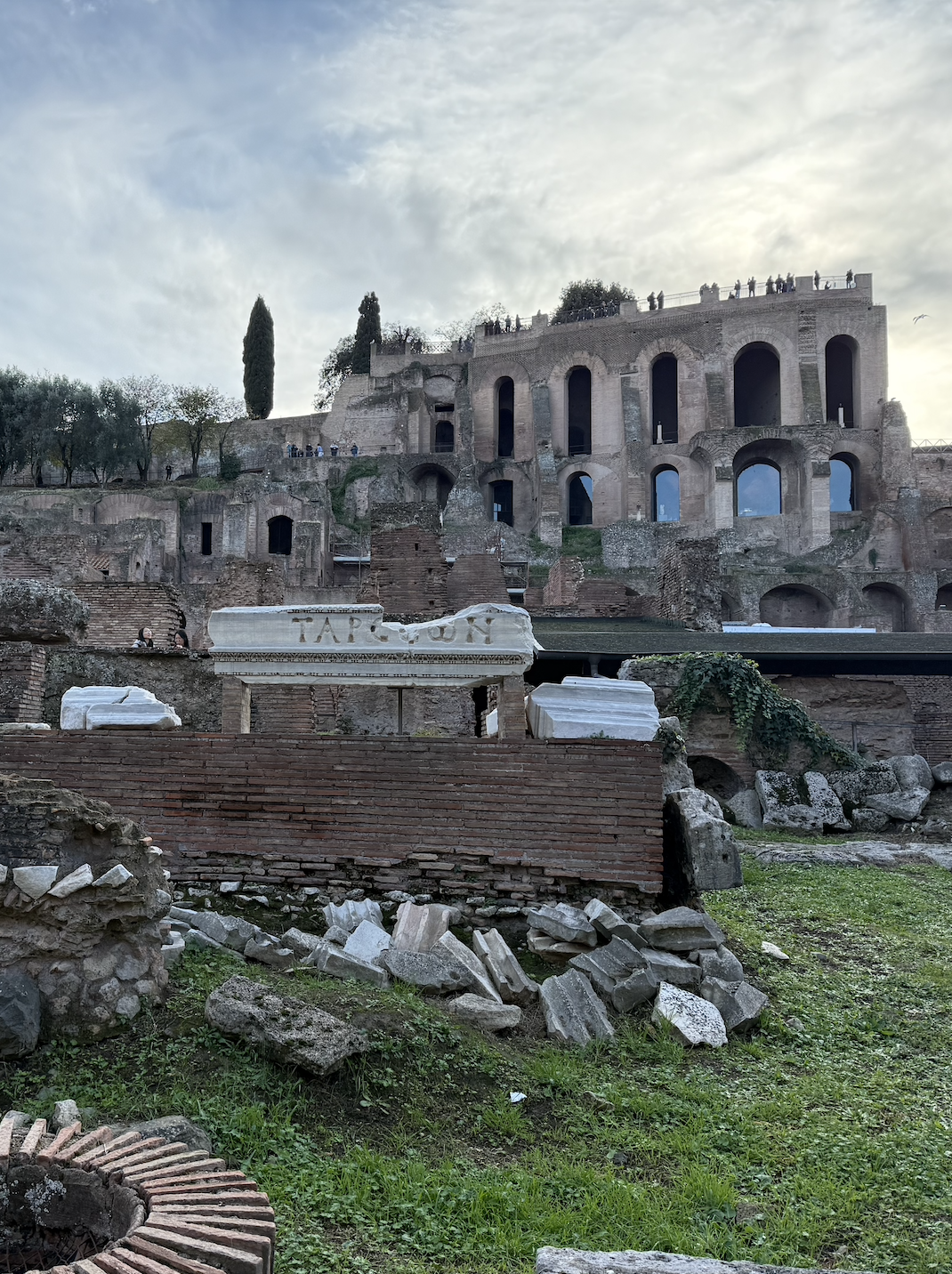
If you don’t visit with a guide, it’s harder to fully appreciate and understand the significance of the ruins. I always find it best to do tour groups for landmarks that you’d otherwise glance at for barely 2 minutes.
In addition to the Roman Forum, we also explored Palantine Hill, which was dotted with Italian pine trees. The palaces have since been reconstructed to imitate its perfected architecture from ancient times. One such example is the gorgeous fountain in the beautiful courtyard rebuilt to be functional.
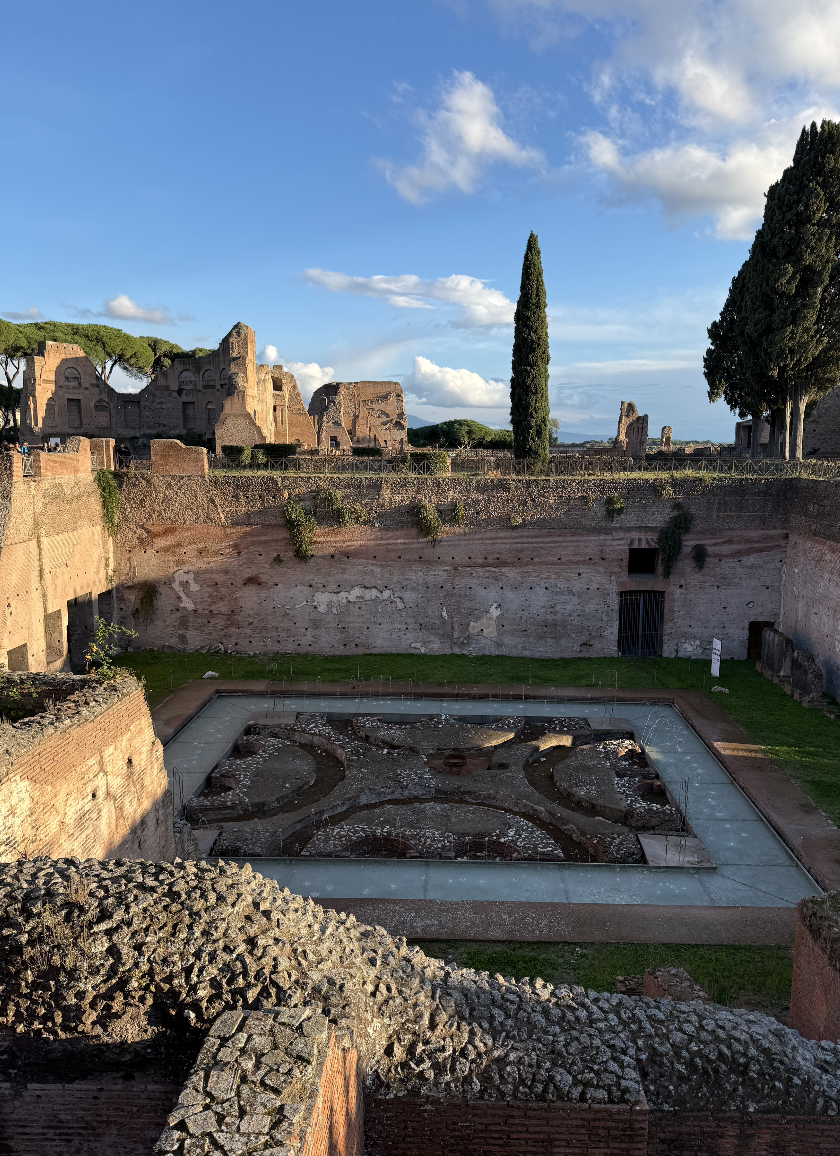
Courtyard on Palantine Hill
After 3 hours of admiring the ancient ruins, we bid our guide Lorenzo farewell, and the tour concluded.
Given how many steps we’d gotten in, there was one thing I really wanted: gelato. We routed to Frigidarium, a popular gelateria near Piazza Navona. I learned later that “frigidarium” meant “a cold room in Ancient Roman baths with cold plunge pools.”
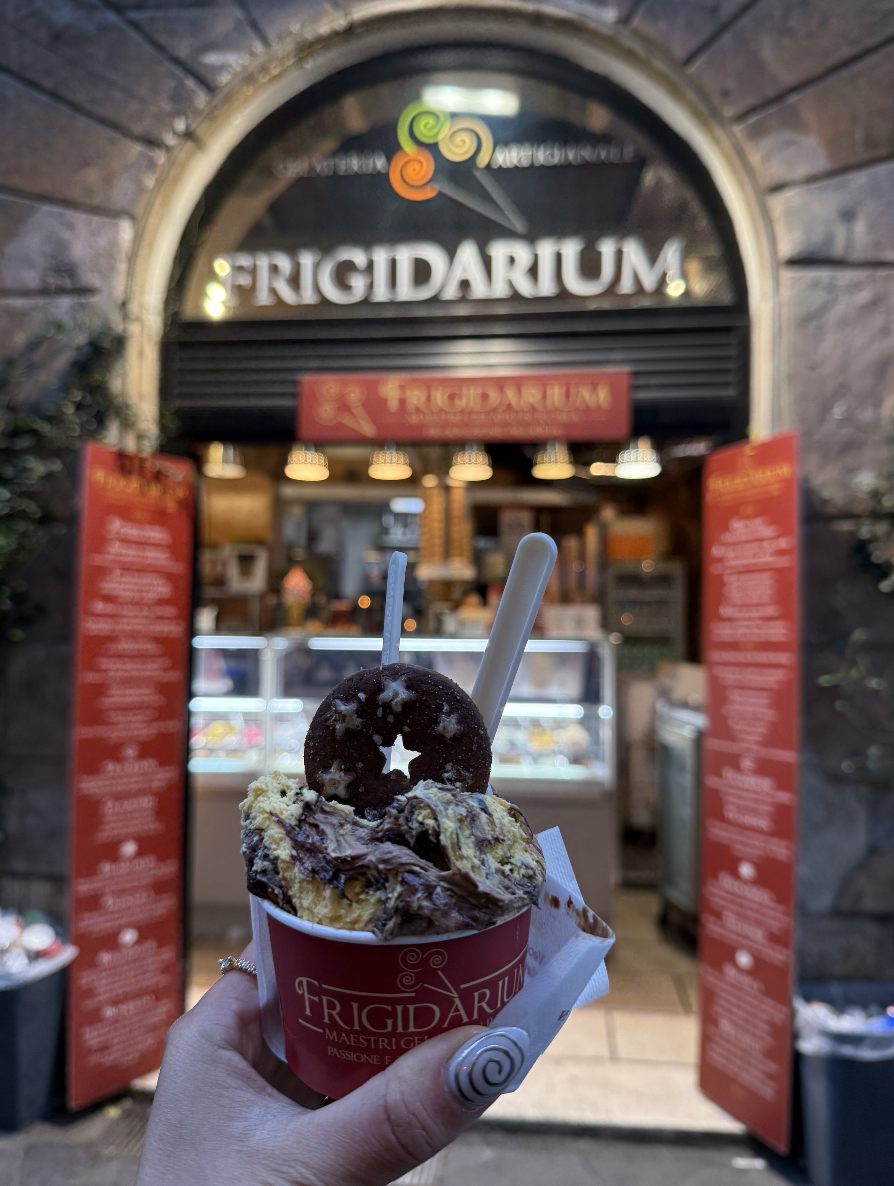
My well-deserved sweet treat
Though we found no pools here, we did find a wide selection of gelato. Here you can enjoy creamy, home-made gelato at a relatively lower price than other restaurants. I enjoyed my 4 euro “Frigidarium“ flavored gelato as I shivered in the cold winter air. Not even the cold can stop me getting my gelato. It was decadent, chocolatey and had crunchy bits of cookie in it.
If you need recs for food, definitely book a resy at Ristorante Pancrazio dal 1922. This restaurant is highly regarded for it’s take on ancient recipes and it’s unique location inside the remains of the Theater of Pompey.
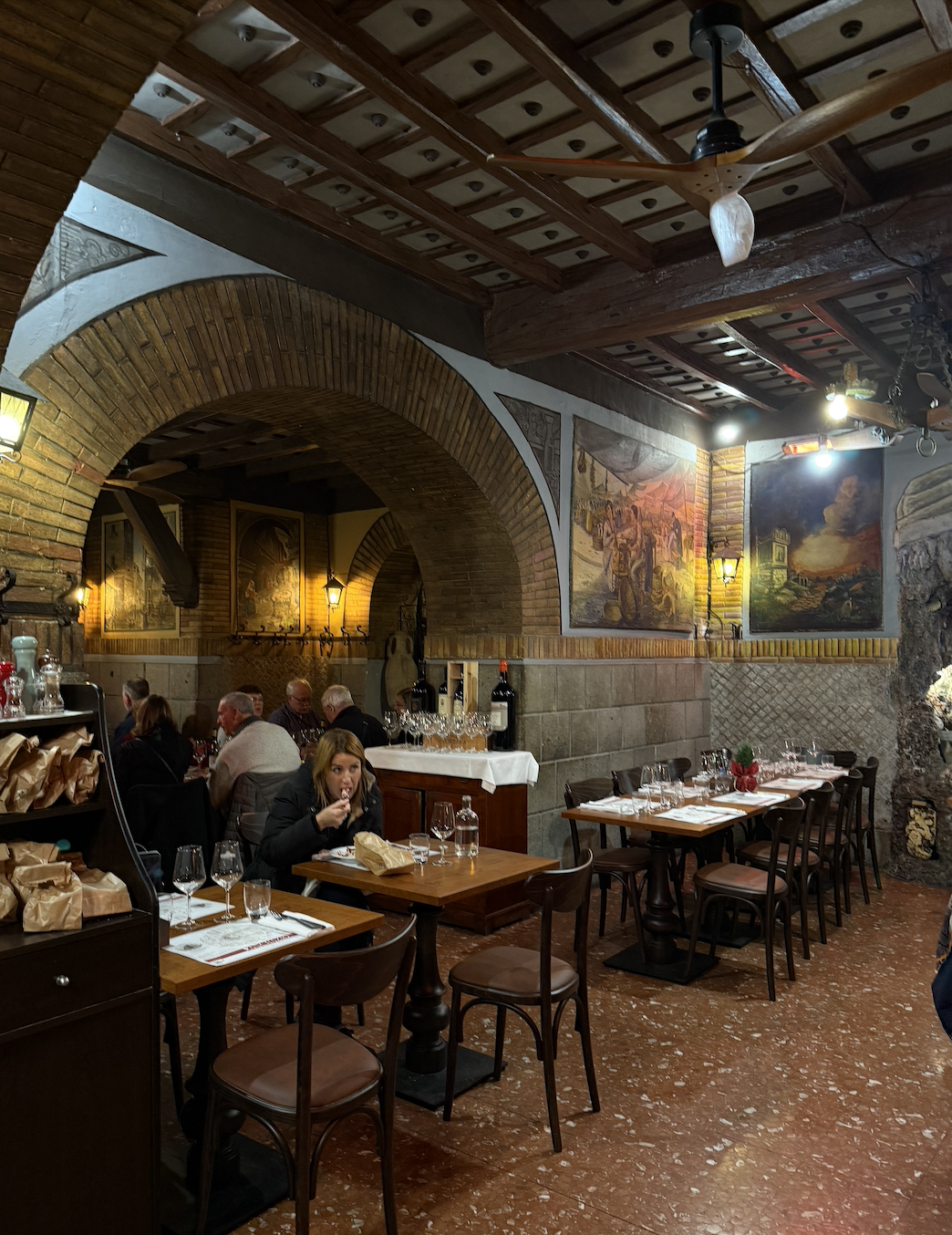
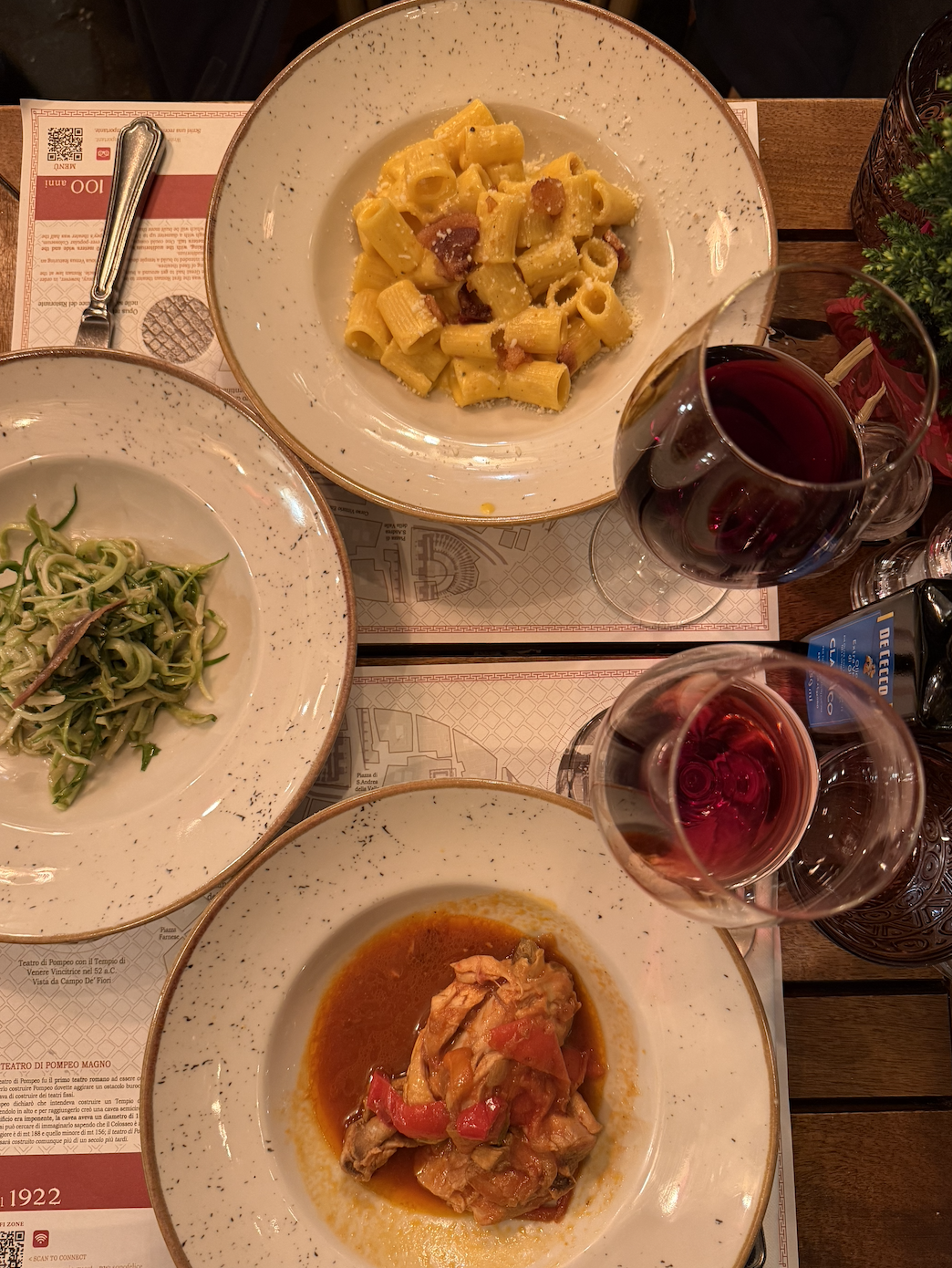
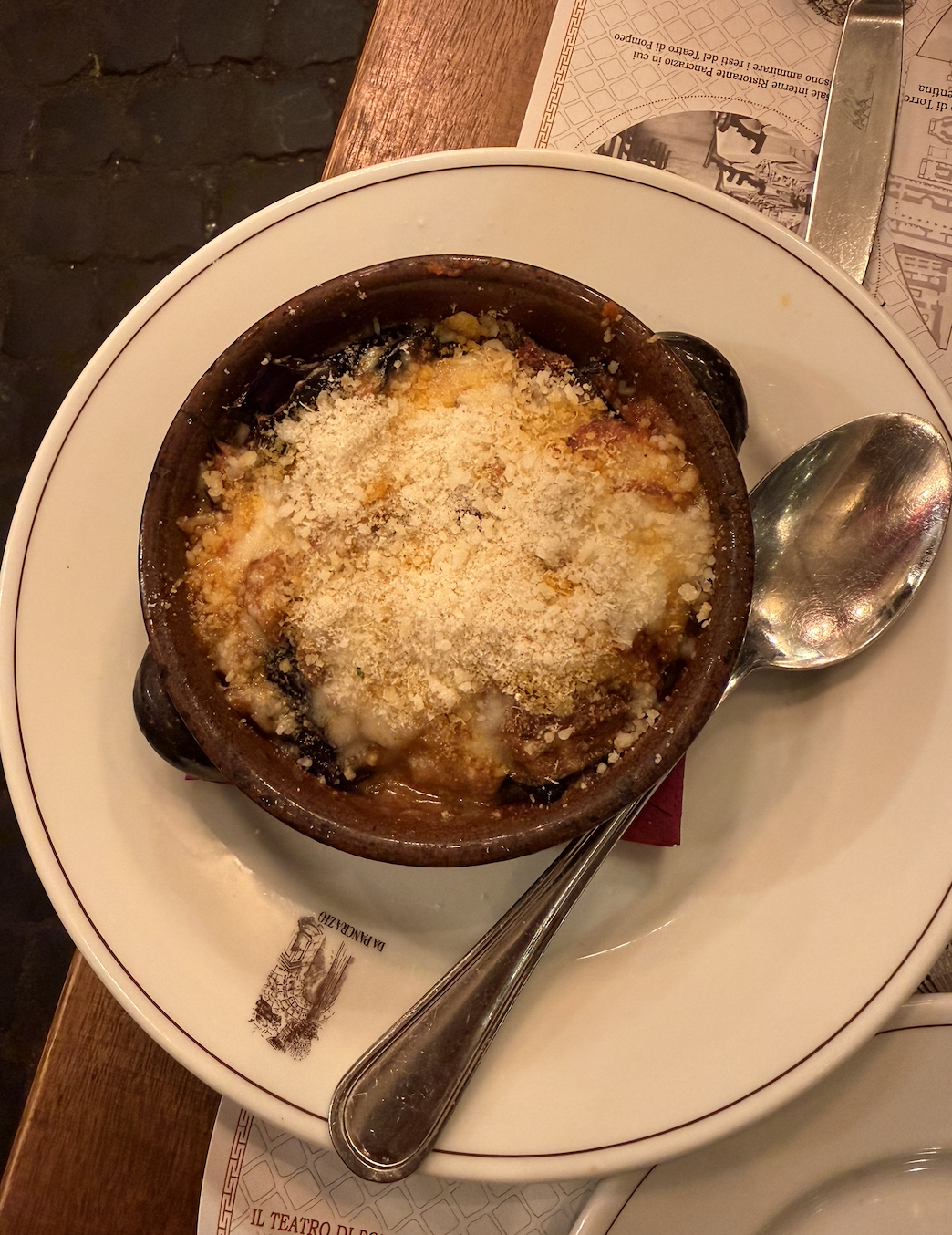
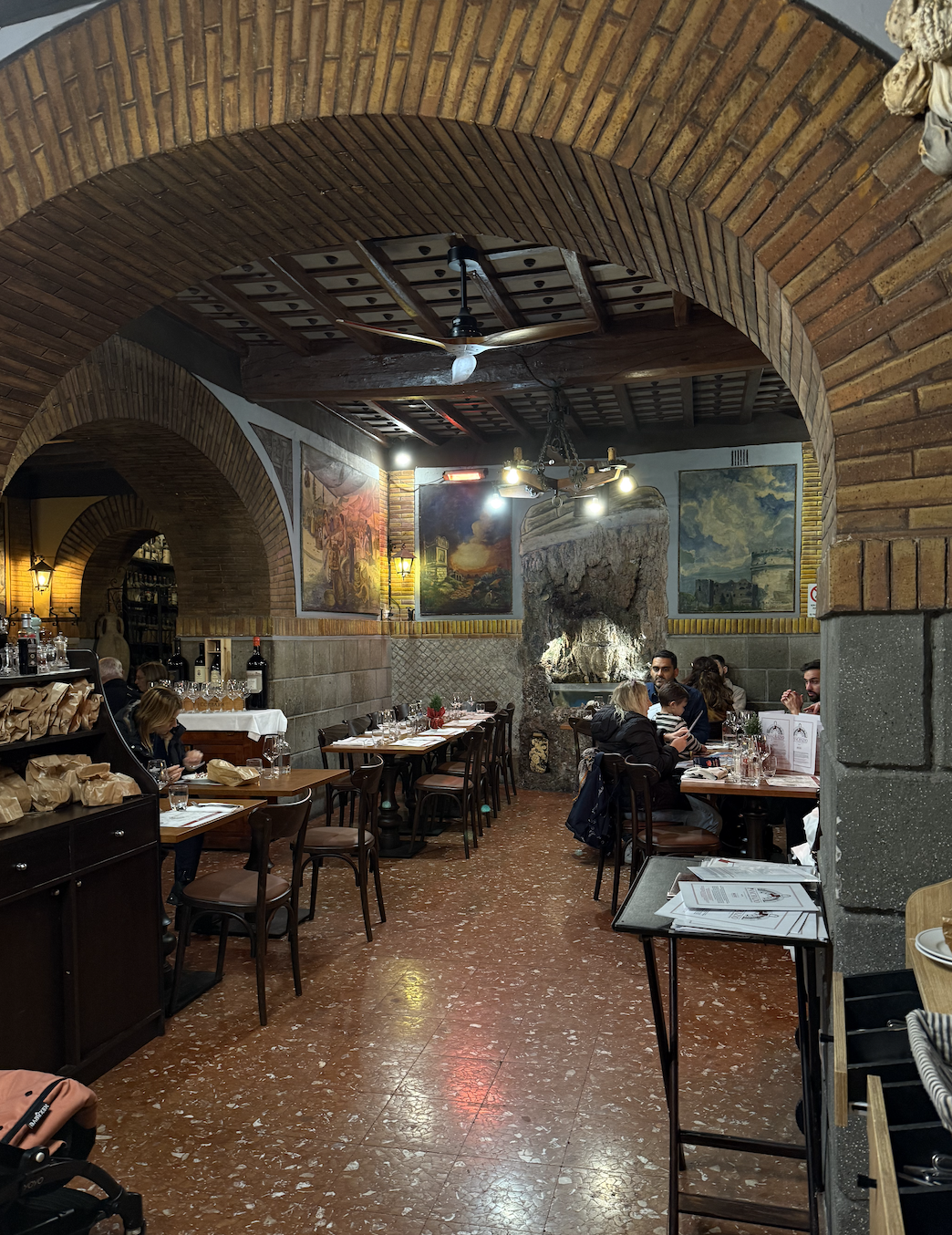
I really loved this restaurant for its ambience and flavorful dishes. We enjoyed the Roman Style Chicken, Rigatoni all Carbonara (white sauce Rigatoni with bacon and egg), and Melanzane alla Parmigiana (eggplant parmesan). All 10/10 - definitely recommend this spot! You’ll want a reservation in advance for this place.
Our post-dinner plans were to go to the Barber Shop Cocktail Bar, a fun speakeasy with pretty cocktails. You’ll need a reservation FYI. After arriving at what looked like an apartment door, a hostess fetched us and led us inside. Tucked away behind an unimpressionable door, the speakeasy is decorated like an old candlelit cellar in a downstairs basement.
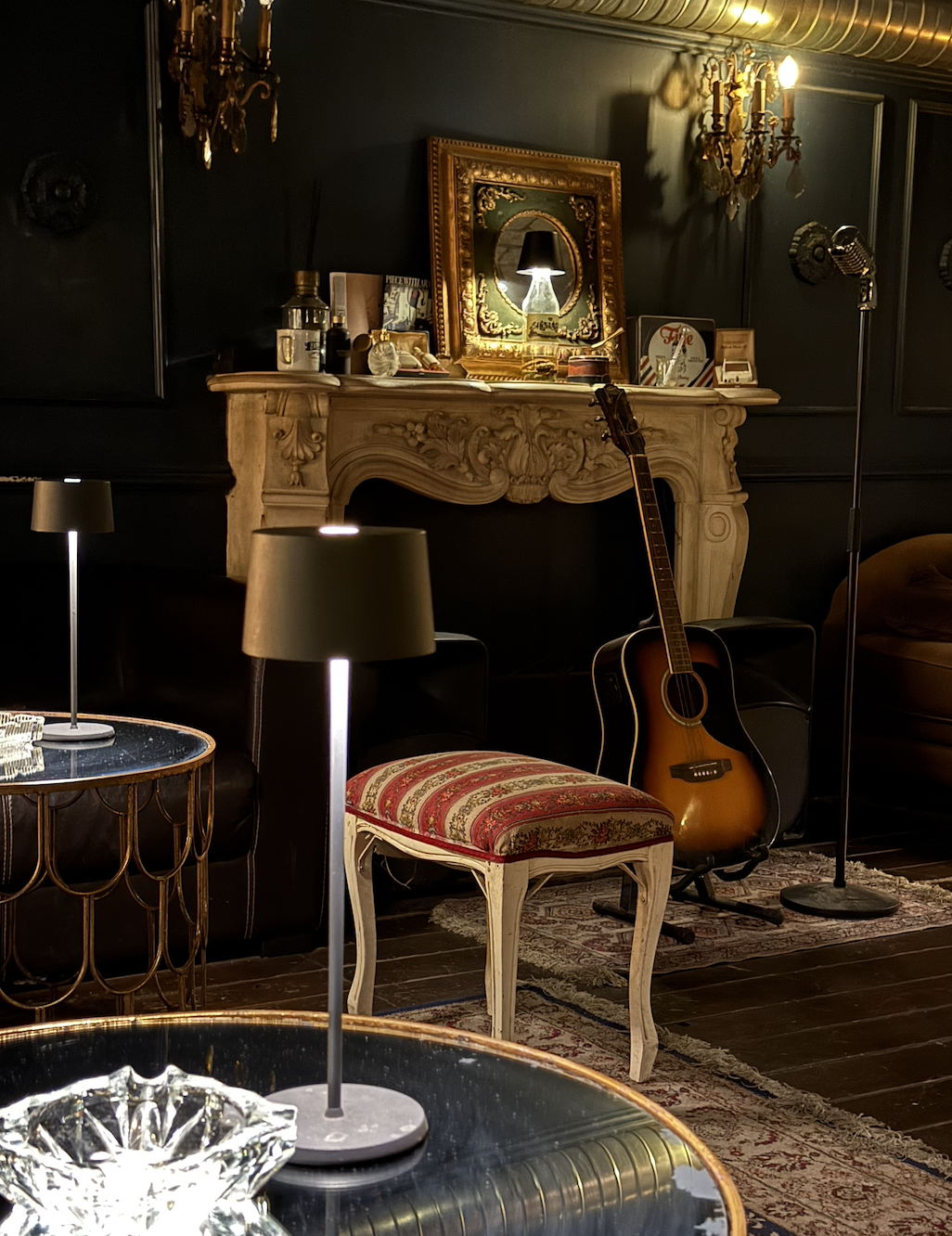
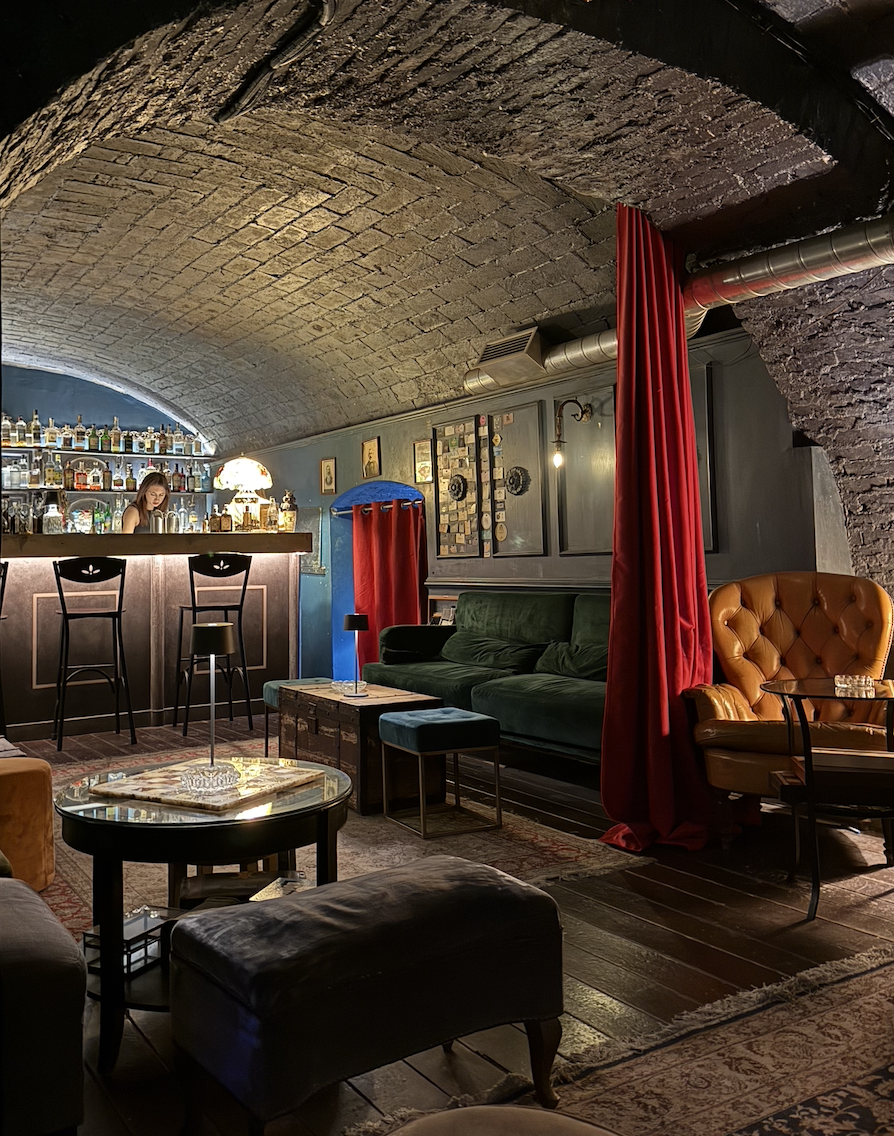
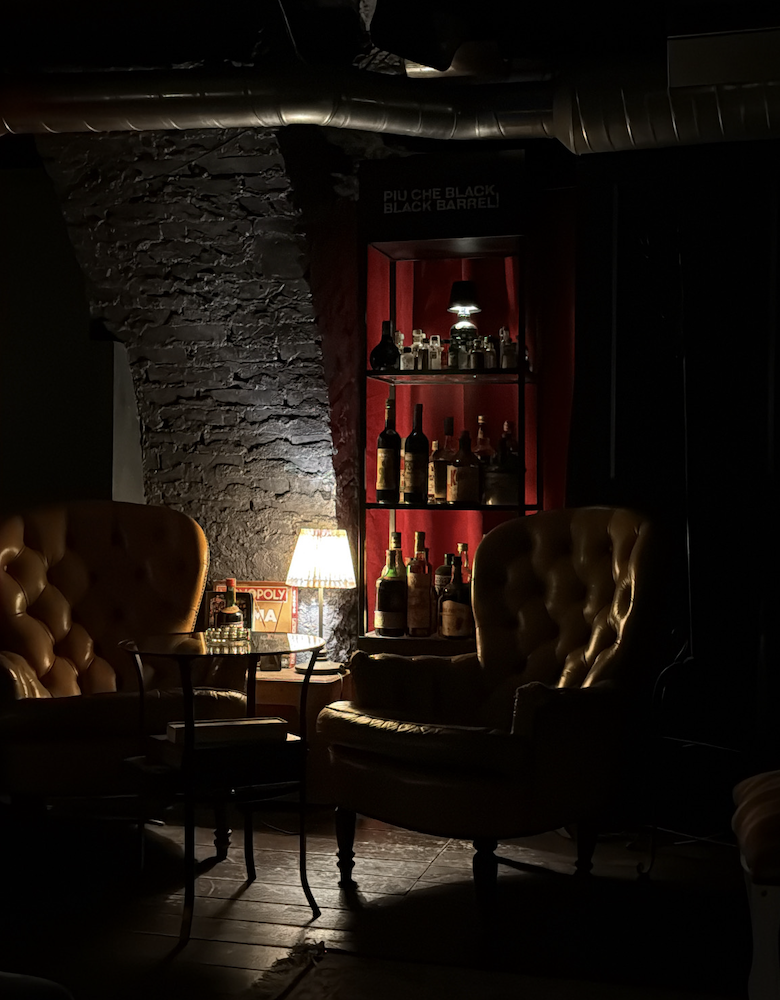
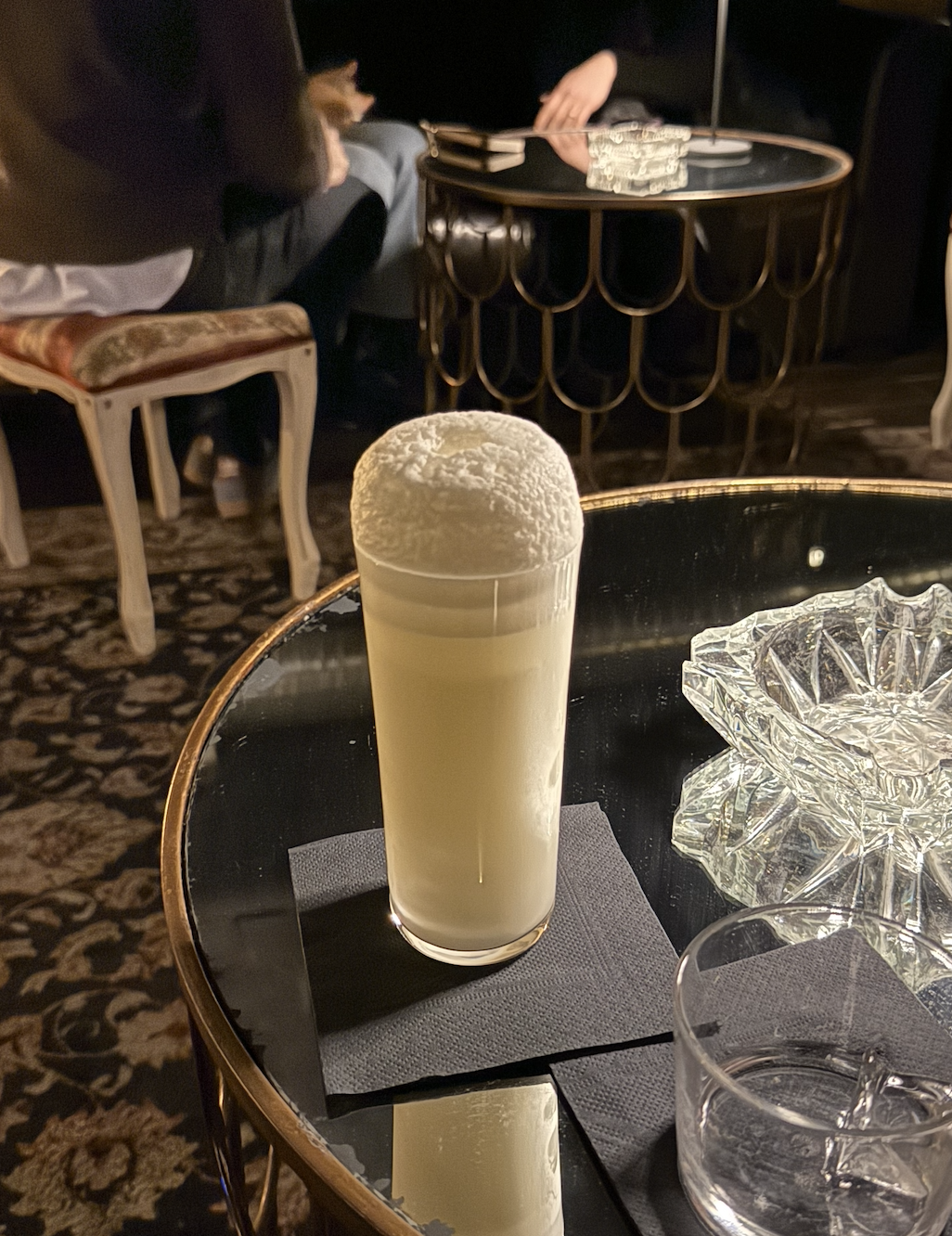
While it isn’t very “Italian” as Brennan commented, it’s still a fun date night bar with good drinks! They even had board games and instruments where live musicians would play later that night.
If you find yourself at this secret bar, try the Ramos Ginfizz!
Day Three: The Trevi, Trastevere & Tasteful Art
On a chilly Sunday morning, we bundled up in our scarves and gloves and sauntered on cobblestone roads leading to the Trevi Fountain. Despite it being rather early, it was already crowded with visitors - typical! I believe Italy is planning to add a small entry fee to the Trevi in 2026, but for now, it’s free.
We waited in line for the ushers to let in small groups at a time. I got my penny ready to toss.
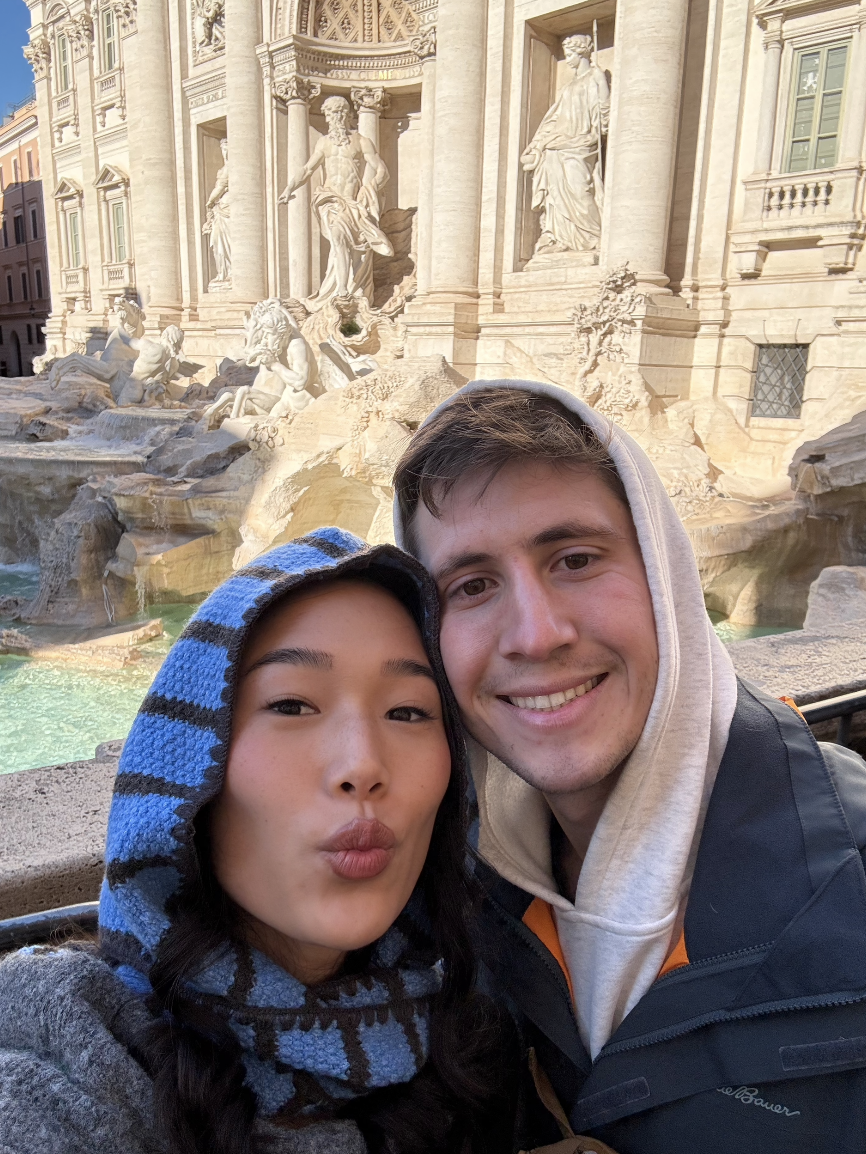
Behold the Trevi Fountain
My wish: something about a happily ever after.
Brennan’s wish: something about his PHD.
While Rome’s conversion to Catholicism rendered all Roman gods “pagans,” this fountain still has Poseidon (and friends) on it. Why wasn’t the Trevi Fountain destroyed with the other pagan temples?
Well, it was built in an era where paganism was no longer a real threat and it wasn’t seen as a temple but more like a utility providing water to the public. The Latin inscription at the top also tributes the Christian “Lord.” It’s placement on the fountain directly above Poseidon acts as a symbol of Christianity dominating paganism. The fountain was of course magnificent, and the bright sun reflected off it’s white marble.
One unique experience that you won’t hear much about is the tour of the fountain’s underground! In a last minute effort to see more cool things in Rome, I booked the underground tour of the Vicus Caprarius, an ancient Roman archaeological site. Our tour guide took us into the site, where we could explore ruins of Roman apartments, mosaics, and an ancient water distribution center. We learned more about the water systems, domestic life in ancient times, and saw many of the archeological findings.
I wouldn’t rank this tour above the others we participated in, as it was a bit underwhelming than expected, but it’s a great option for history and engineering buffs.
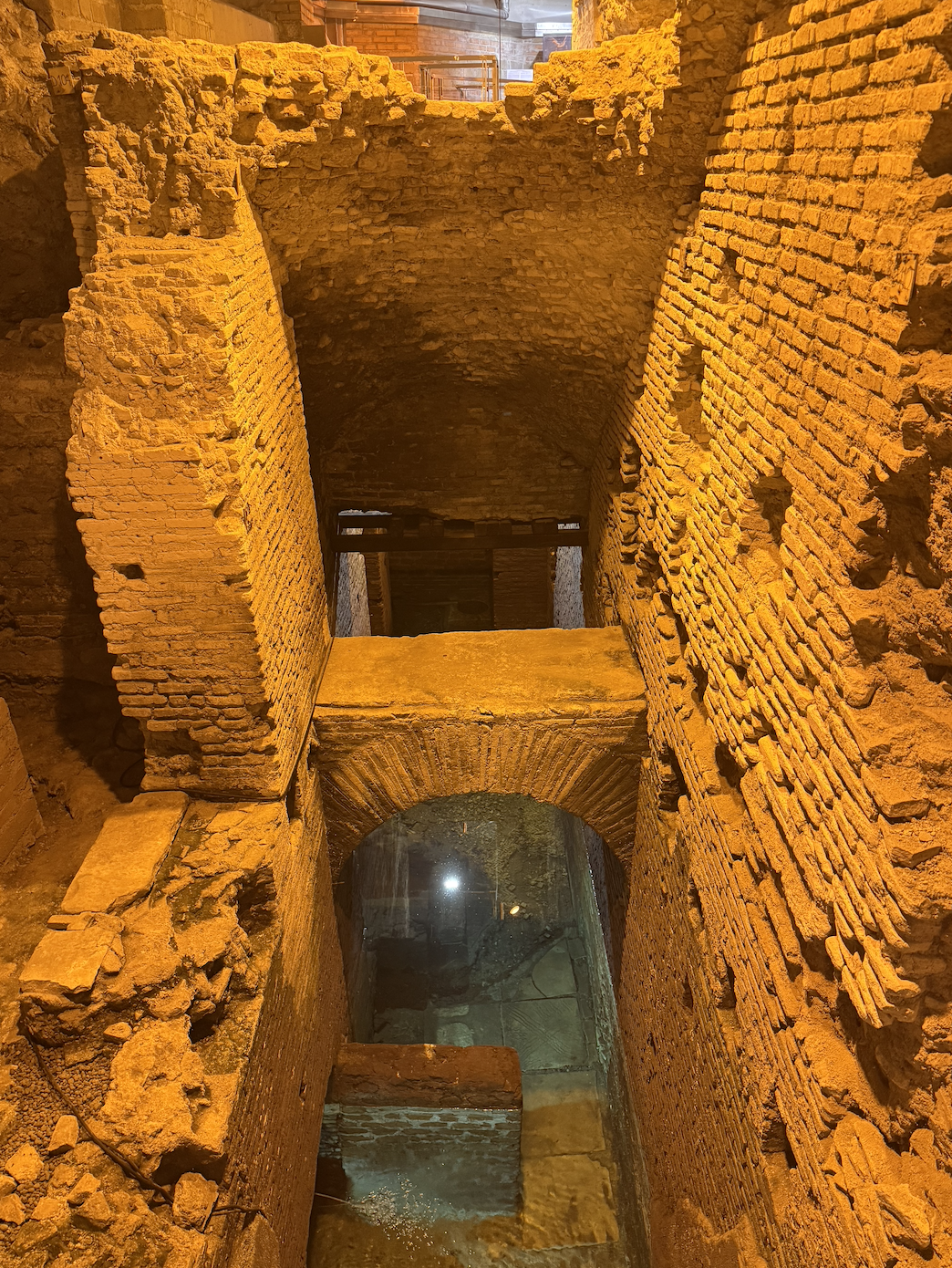
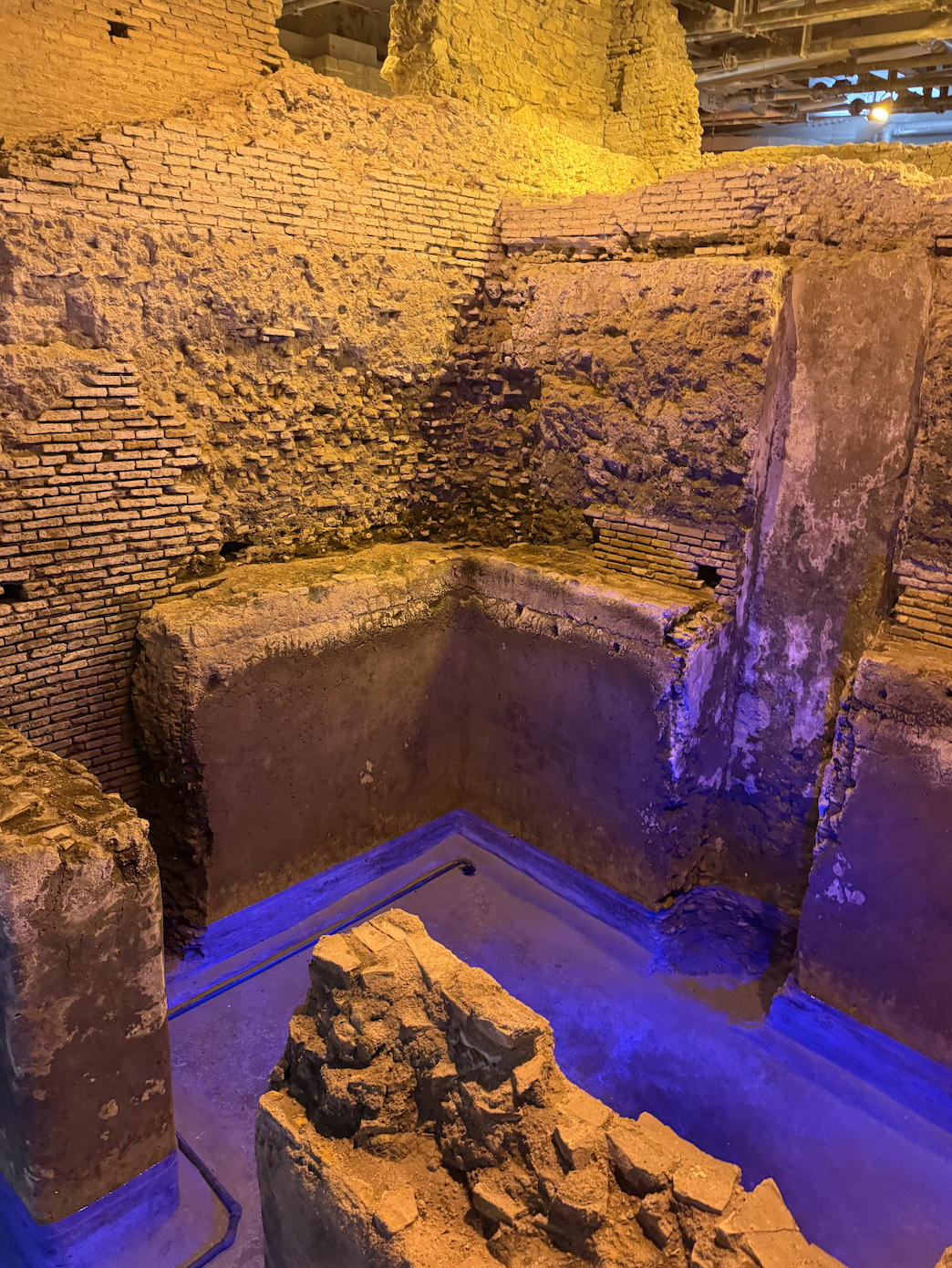
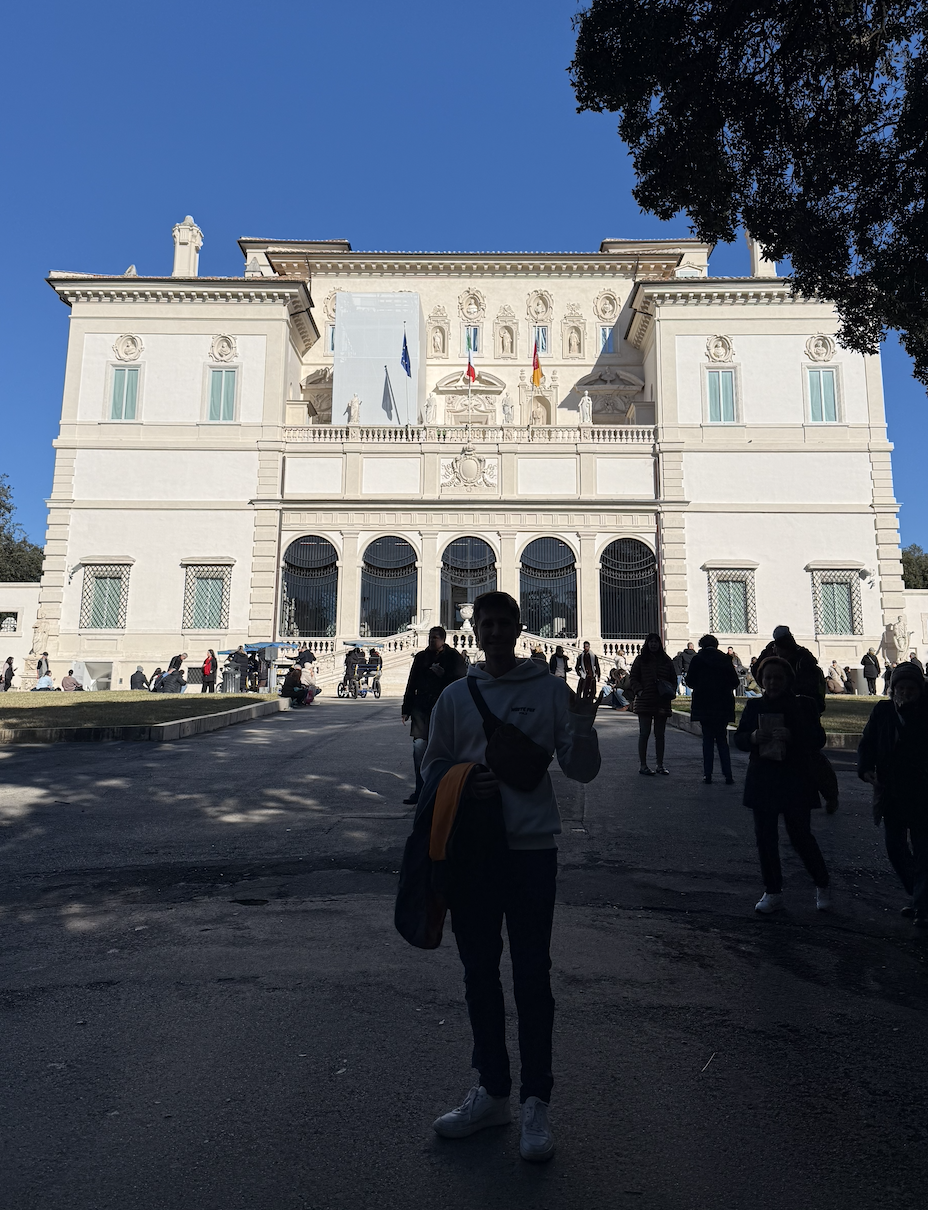
After our underground excursion, we routed to the Galleria Borghese, a very beautiful white and gold villa that houses a beautiful collection of art. The Borghese family is made up of elite papal and noble members, and they rose to wealth in 1605 because of their involvement in politics, the church and art patronage.
The villa, which feels as grand and affluent as it sounds, sits in the middle of a big park, perfect for sunbathing or a stroll. The gallery is open every day except Monday and brings in nearly 700,000 people annually.
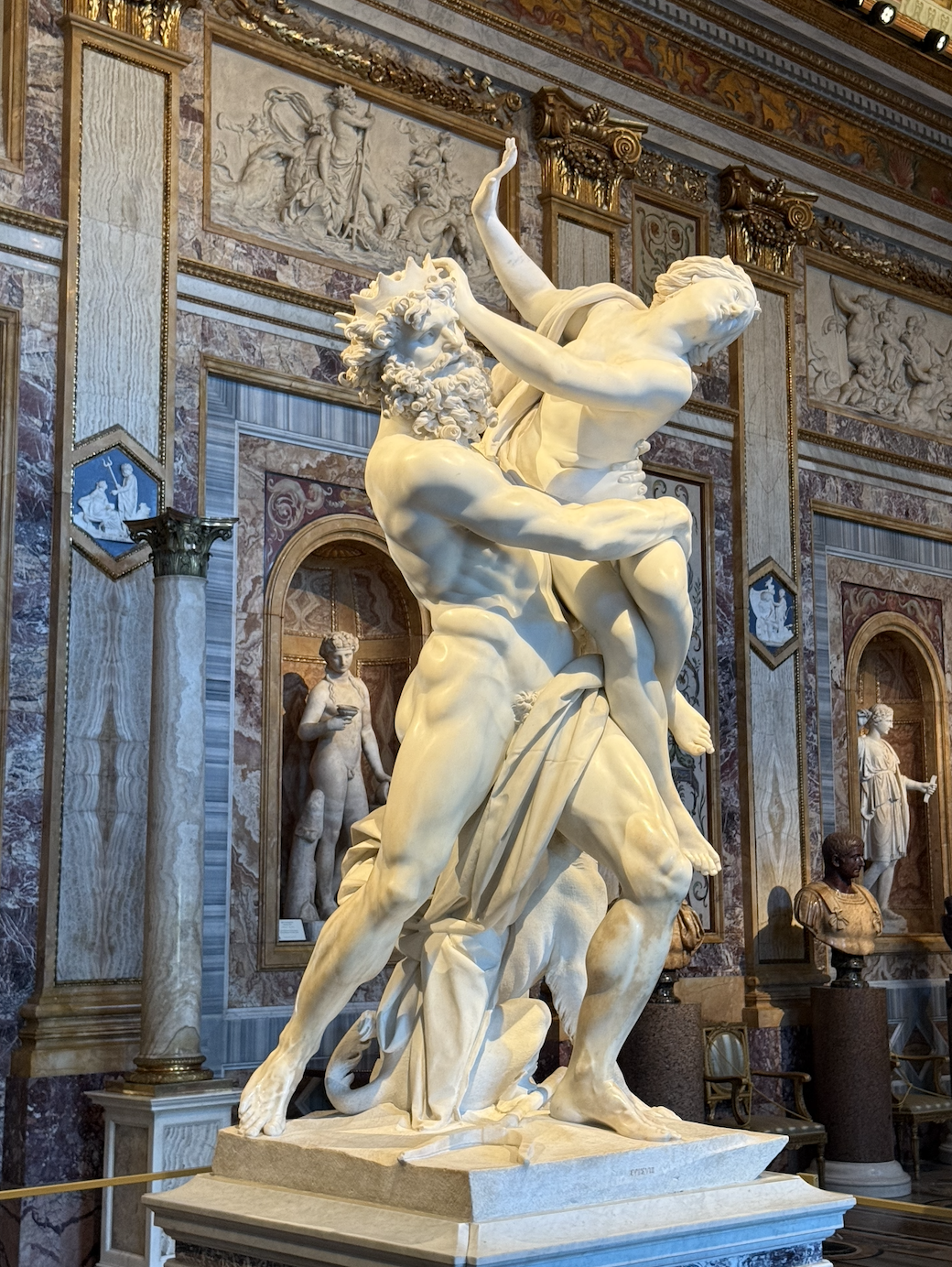
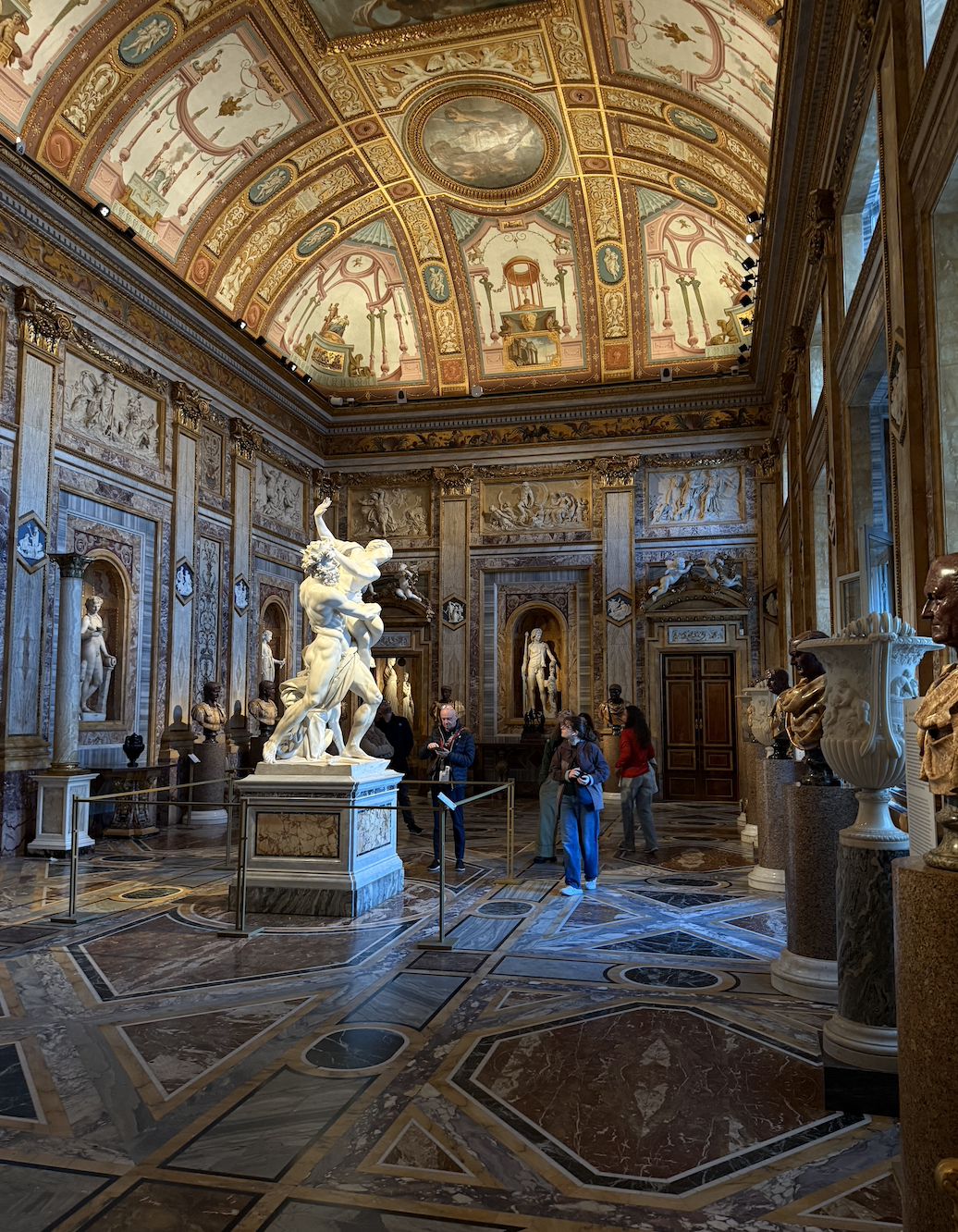
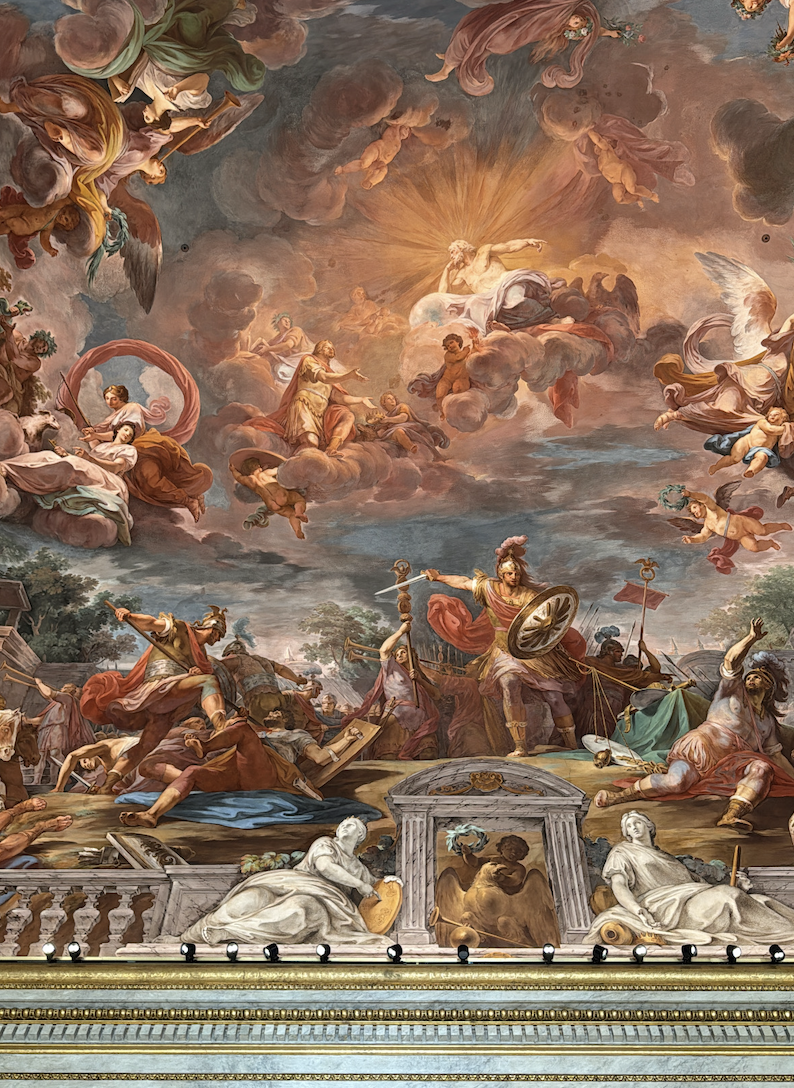
For $25, you can get access to some of the finest art in the world. We purchased audio guides in advance and used them as we roamed through the different rooms. One thing I especially appreciated about the gallery was how diverse the art and sculptures were. It wasn’t repetitive pictures of “the Madonna and Bambino” as we saw at the Vatican and Sistine Chapel. Here you could admire marble sculptures like “Apollo and Daphne” and “The Rape of Prosperina” as well as paintings like “David with the Head of Goliath.”
One notable artist who’s many paintings are displayed is Carvaggio, a name you will certainly hear in the Italian art community. He was known to be troublesome and unhinged, which aligns with his controversial use of prostitutes as models for his paintings. His use of prostitute faces in specific paintings of the Virgin Mary led to dismay and protest from religious officials, yet he was revered still for his realistic and gritty paintings.
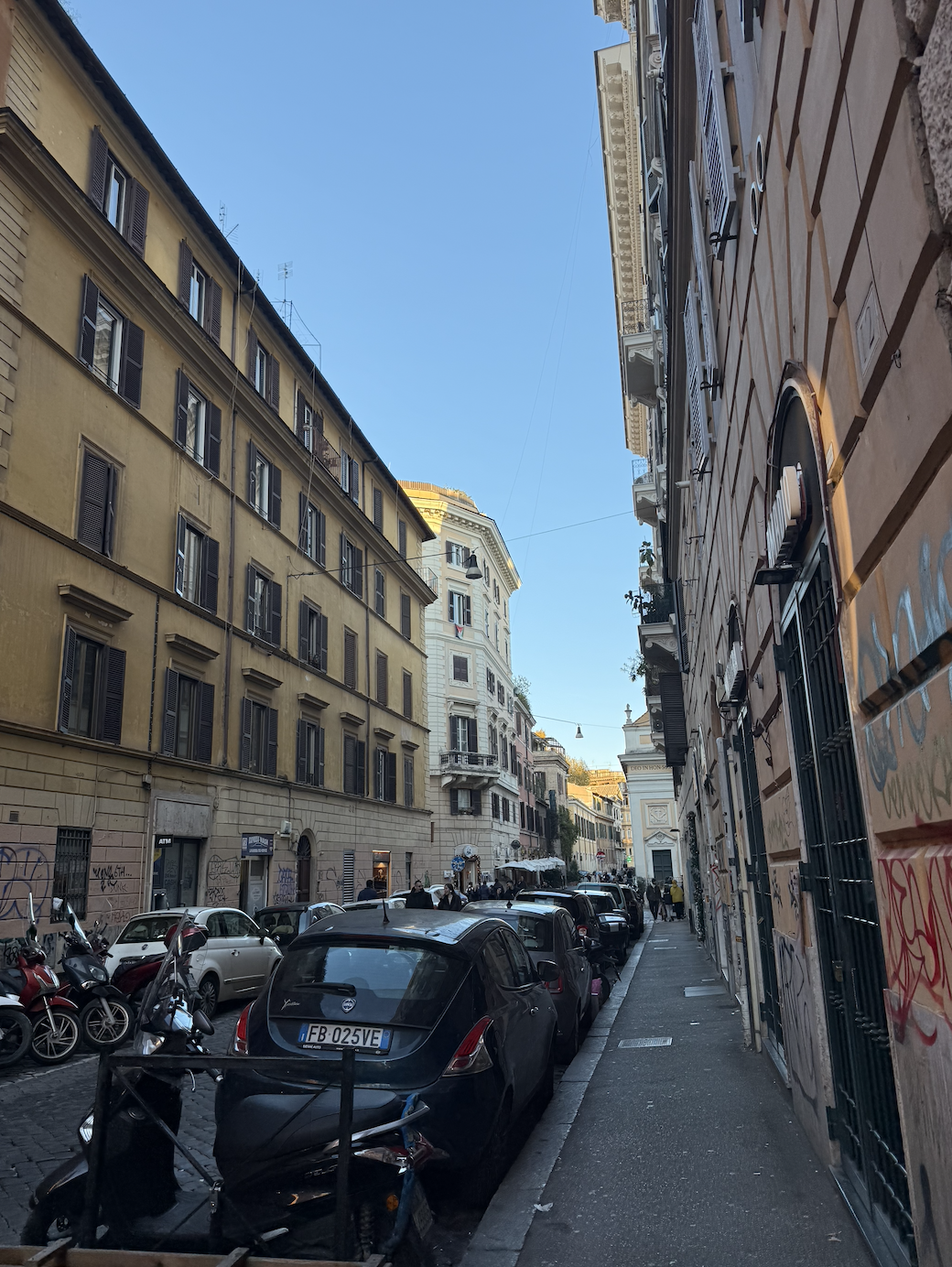
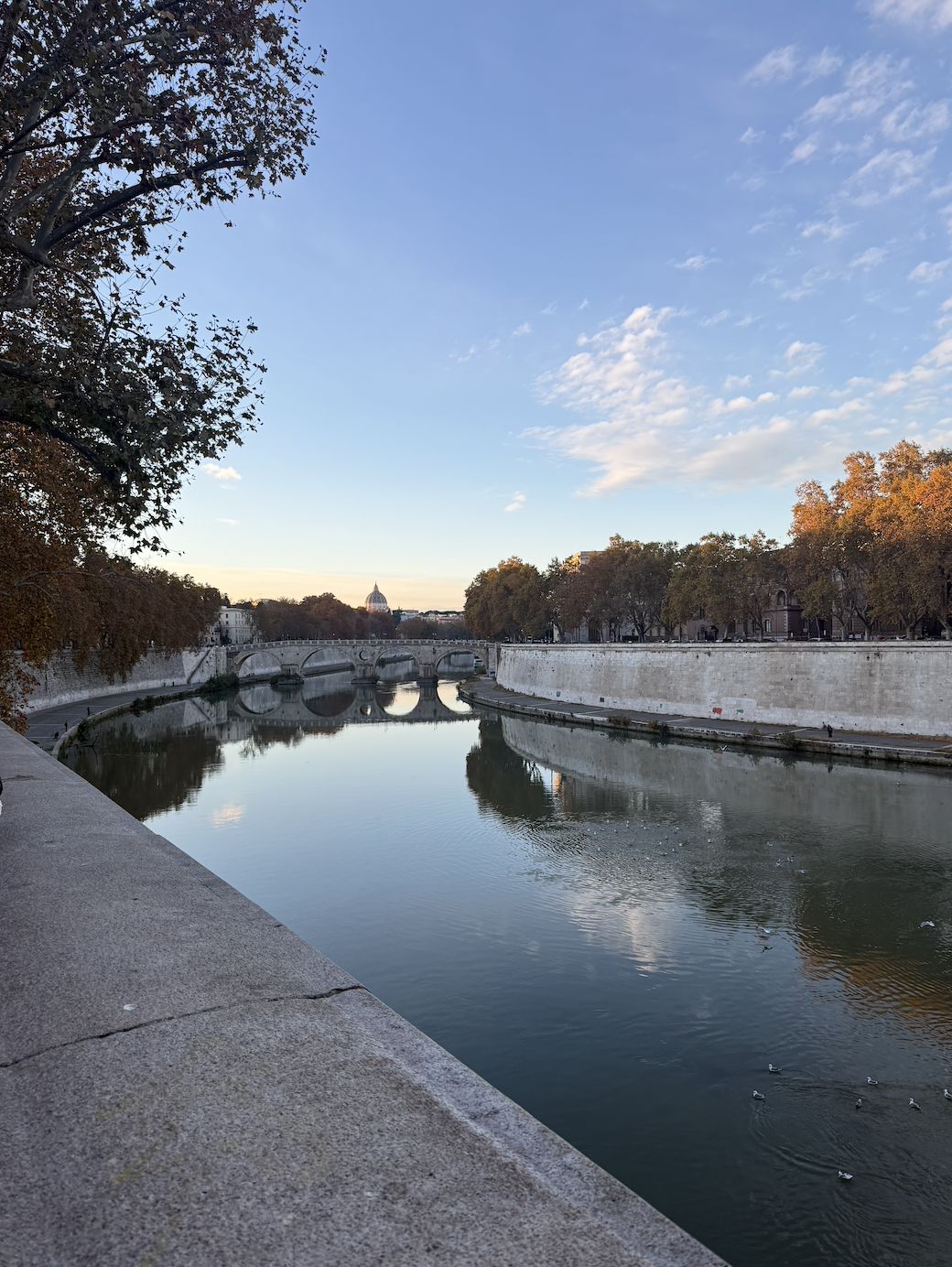
The rest of our afternoon was spent exploring the “coolest neighborhood in Rome” known as Trastevere. This neighborhood is located on the west side of the Tiber River. It’s known for it’s bohemian vibe, residential neighborhood, and diversity of breweries and restaurants.
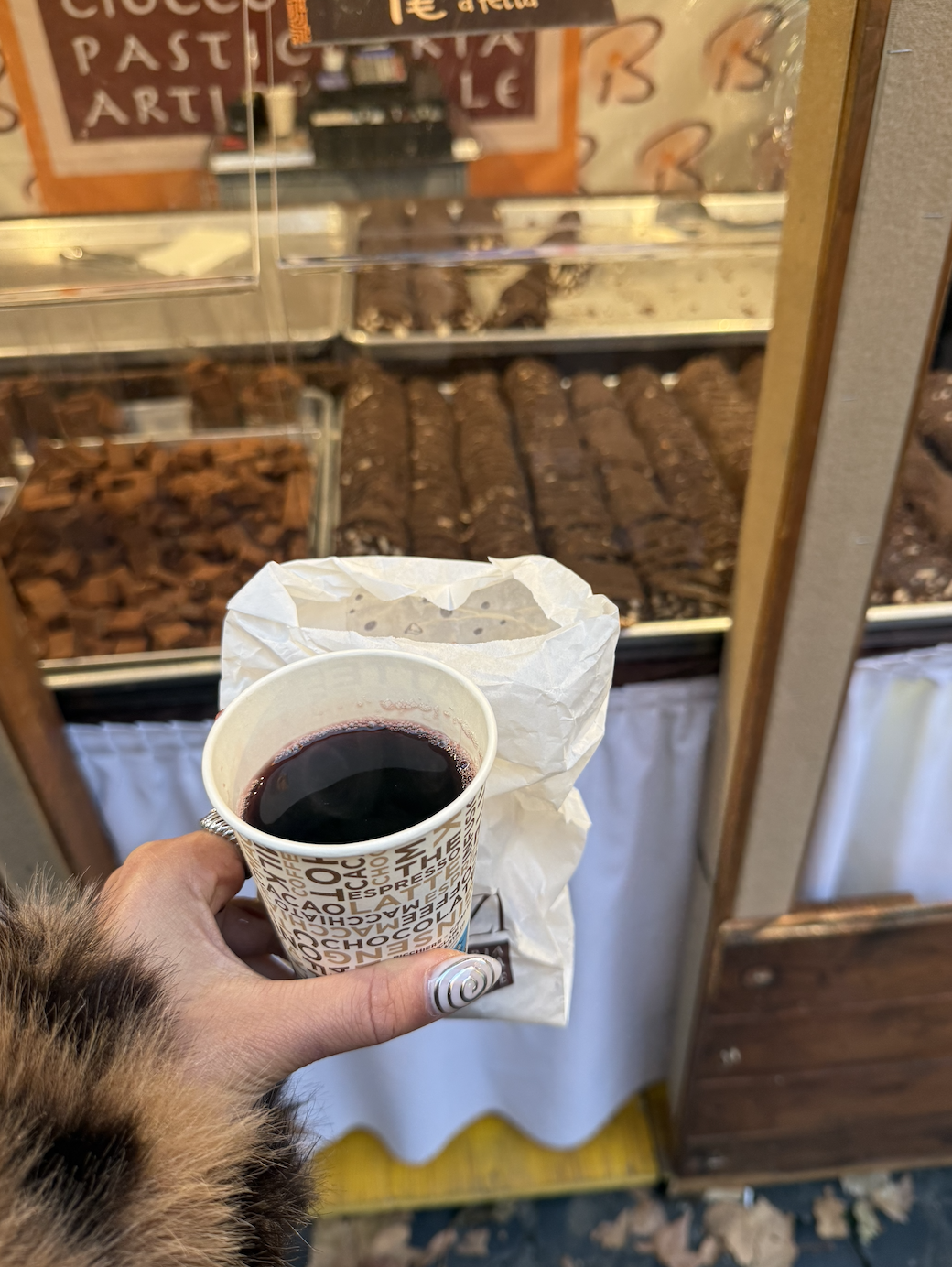
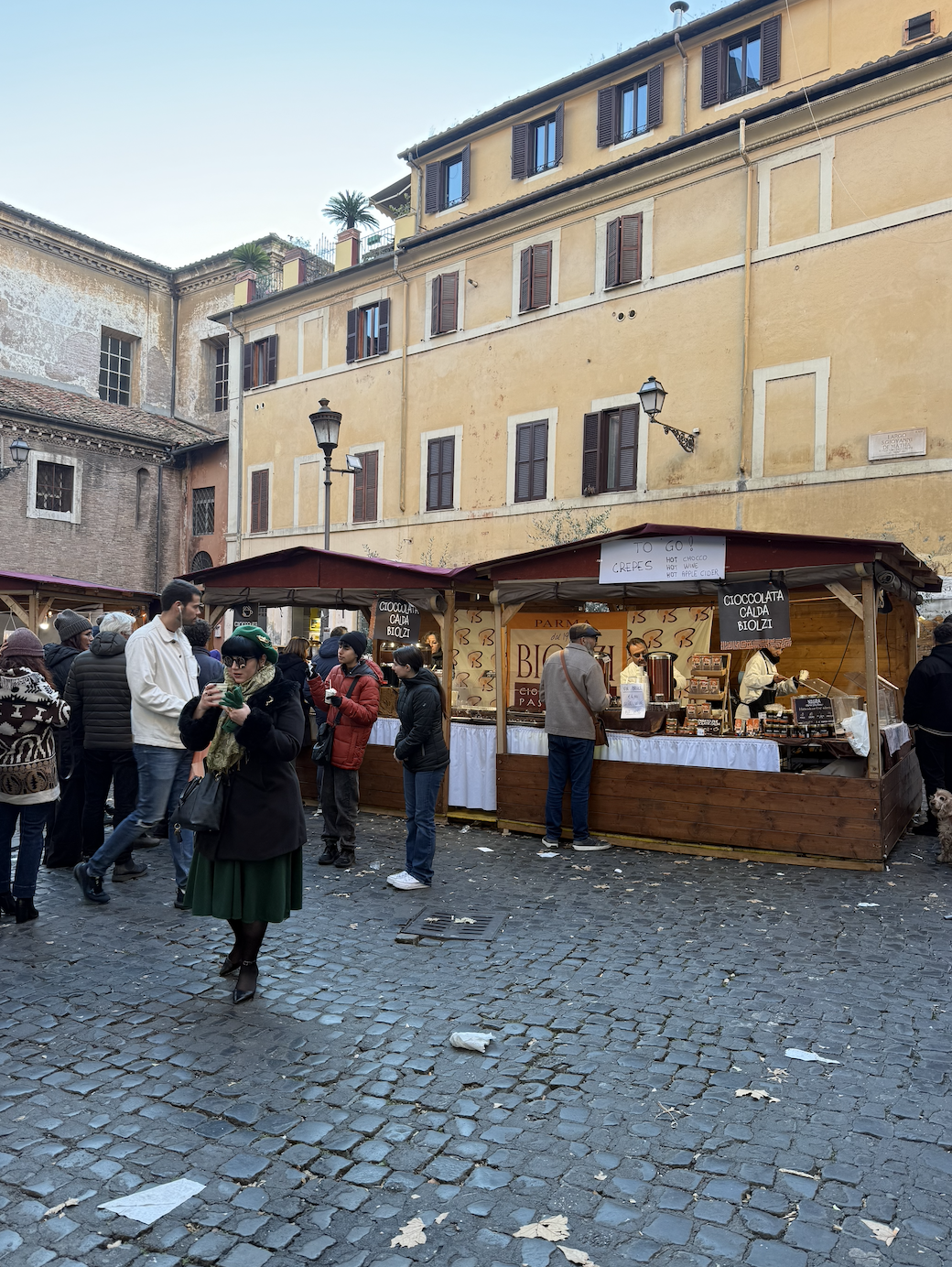
We happened to be around for a big chocolate event happening in a square. We bought some mulled wine, chocolate covered orange peels and chocolate biscuits from the vendors.
Because Trastevere is more residential, there isn’t much “to do” here except eat or drink, so come hungry! One restaurant I was recommended in the area is Supplì Roma, a compact eatery with pasta, fried meat snacks and pizza by the slice.
After Trastevere, we went to a restaurant called Casadante, a cafe-by day and restaurant-after-7 pm. Unfortunately, it was only 5 pm when we got here, so we just stopped in for a quick break. The vibes were immaculate though, and I loved the interior decor. We considered a few other interesting restaurants: The Sanctuary Eco Retreat, La Nuova Piazzetta, All’ Antico Vinaio….the food options are overwhelming, but thankfully you can’t really go wrong.
We ended up getting an exquisite dinner at Ai Tre Scalini, a bottiglieria that’s been around since 1895! Ai Tre Scalini was originally an old winery, so of course you should pair your meal with some local vino. This buzzing bistro is located near the Colosseum and has meatballs and ravioli that will hit the spot.
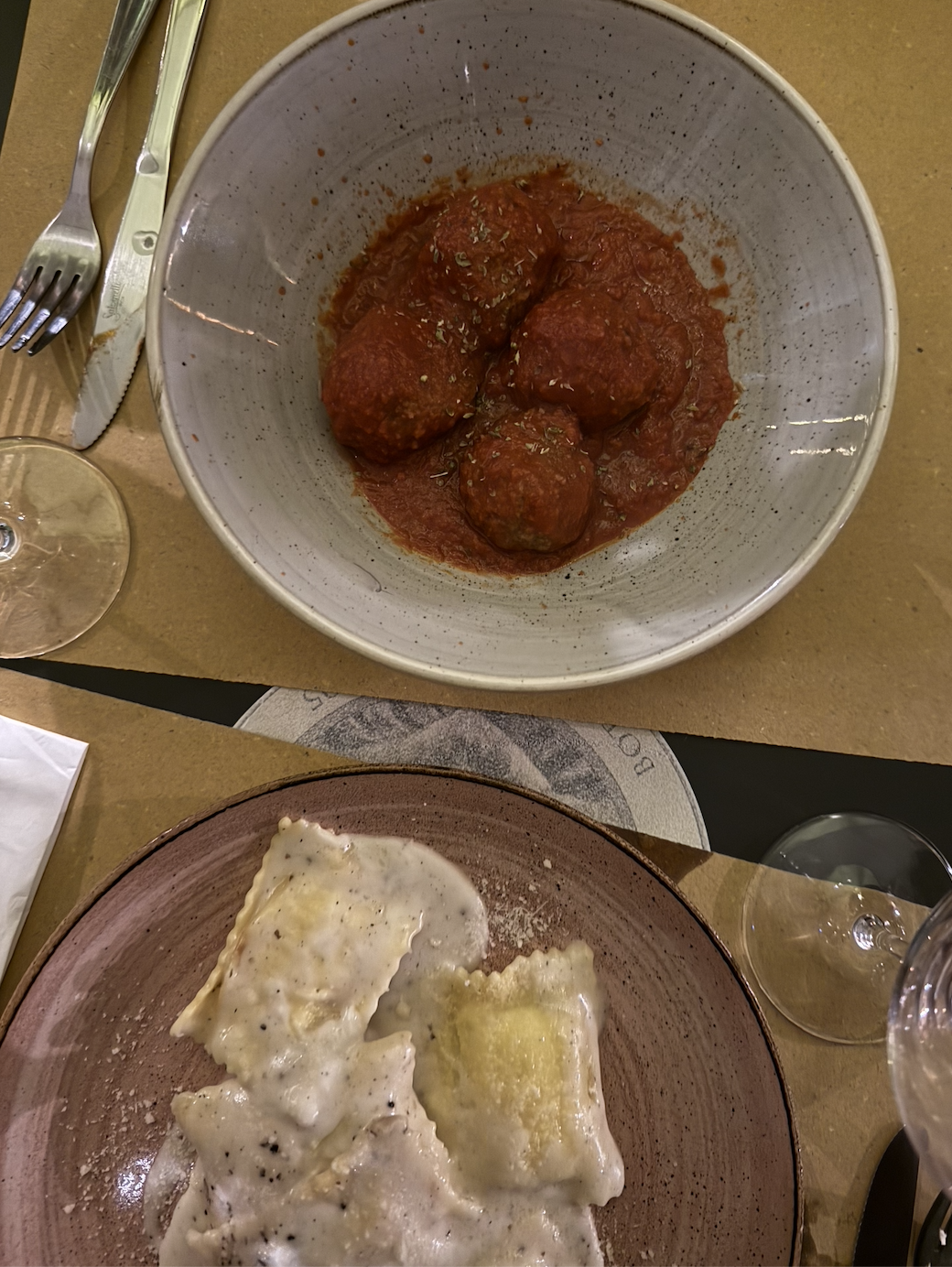
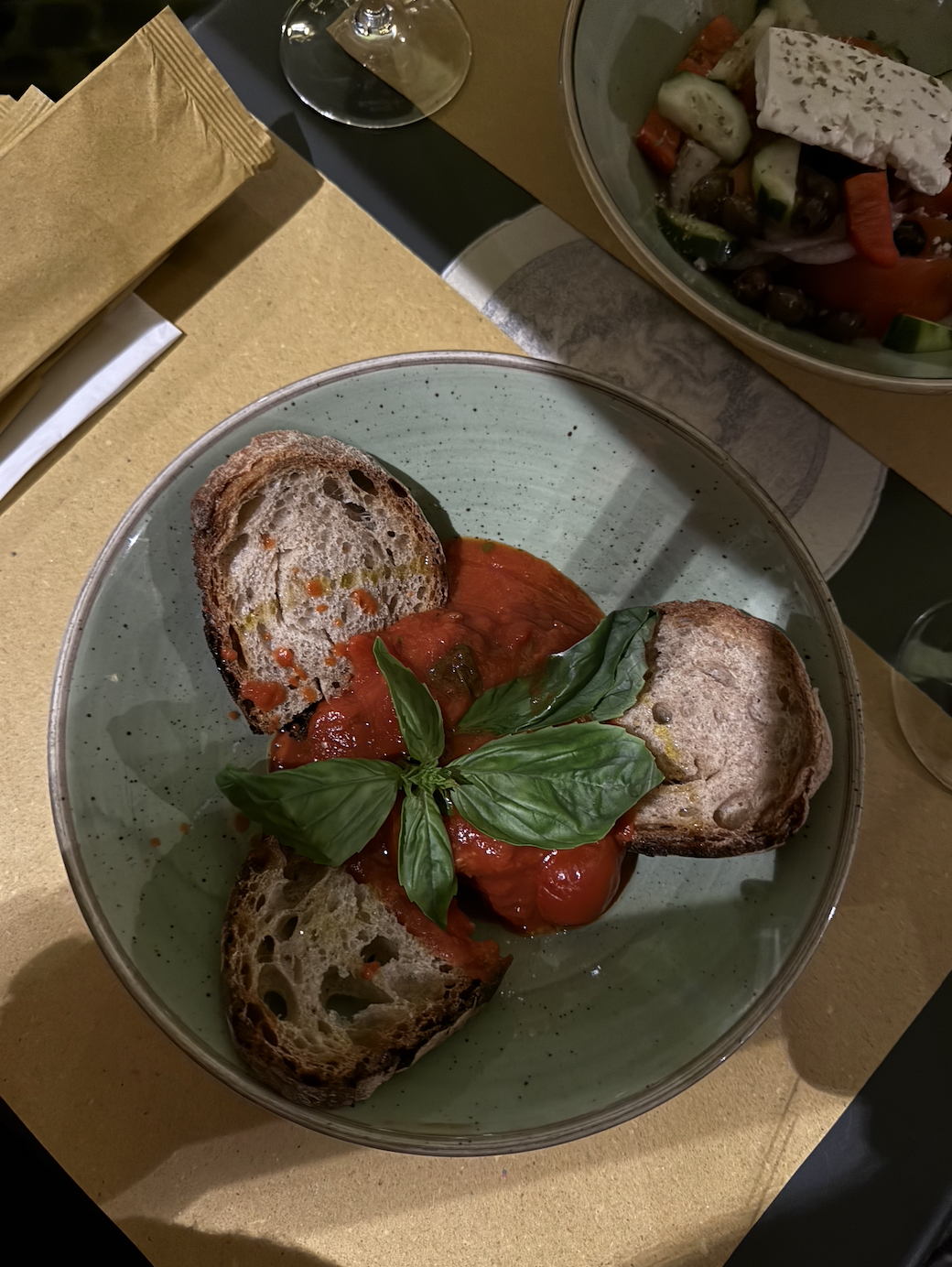

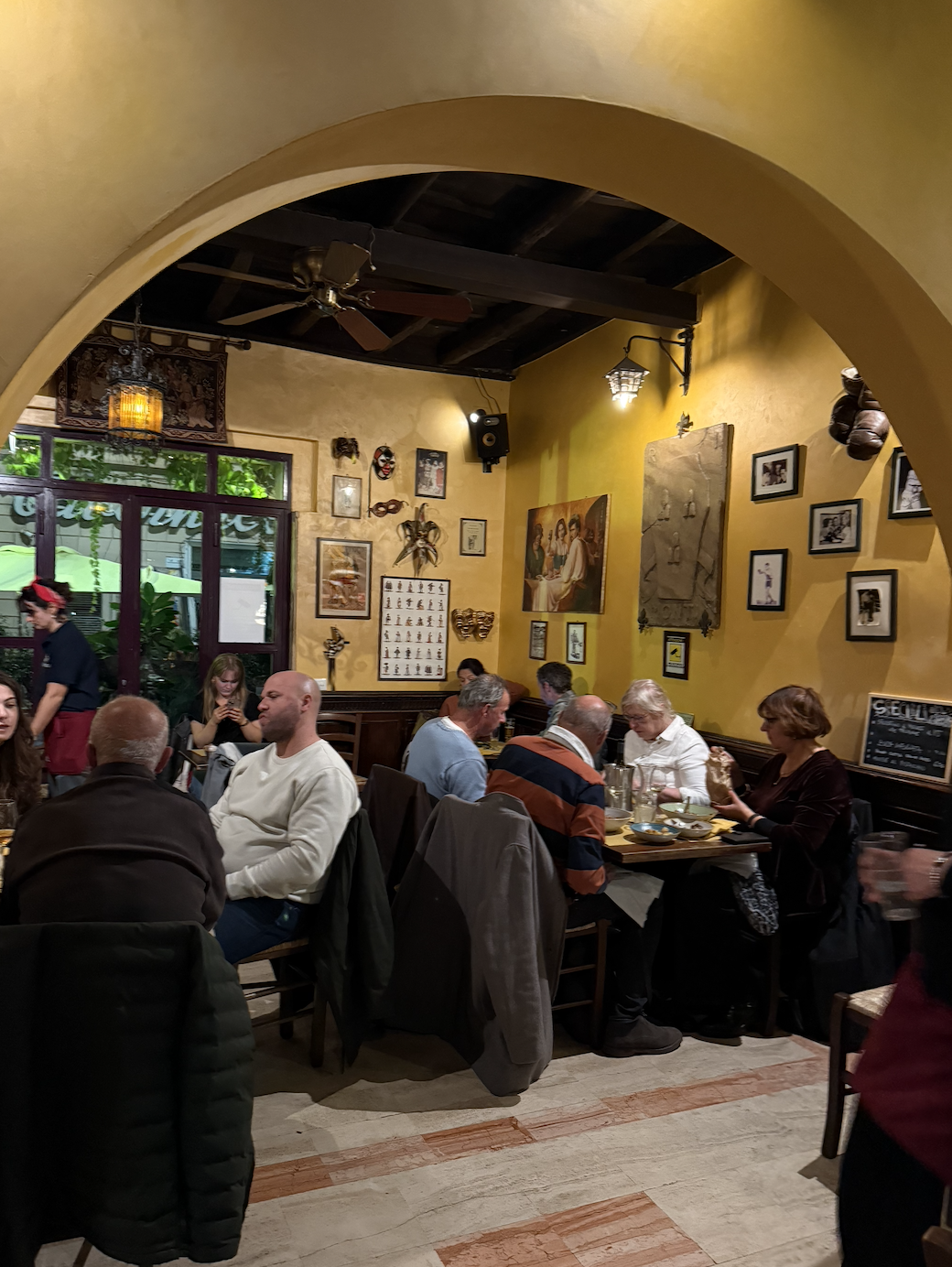
It gets fairly busy and they don’t take reservations, so best to show up before peak hours.
Day Four: Mozzarella On My Mind
What a long article. I wasn’t joking when I said covering all of Rome in one article was overwhelming.
We’re almost done though!
Brennan and I had a rather relaxed itinerary for our last day. Besides doing some shopping in the district of Colonna (and yes, you should go in the 4-story Zara), we mainly just enjoyed more Italian food and walking around Rome. We grabbed lunch and dinner at Vitti Roma dal 1898, where you can get top notch pizza, pasta and seafood for 30 euros or less! It’s located in Piazza di S. Lorenzo, which was a lively square with various food options. We enjoyed the grilled squid, mushroom and salami pizza, and wine. Oh, and don’t skip out on their selection of divine pastries inside and their gelato cafe just next door.
As a little “night cap,” we went out of our way to Giolitti, one of the city's most popular and historic gelaterias. The inside feels like a cross between a fancy hotel and old school diner. They serve pastries, cakes and of course, gelato - something for everyone!
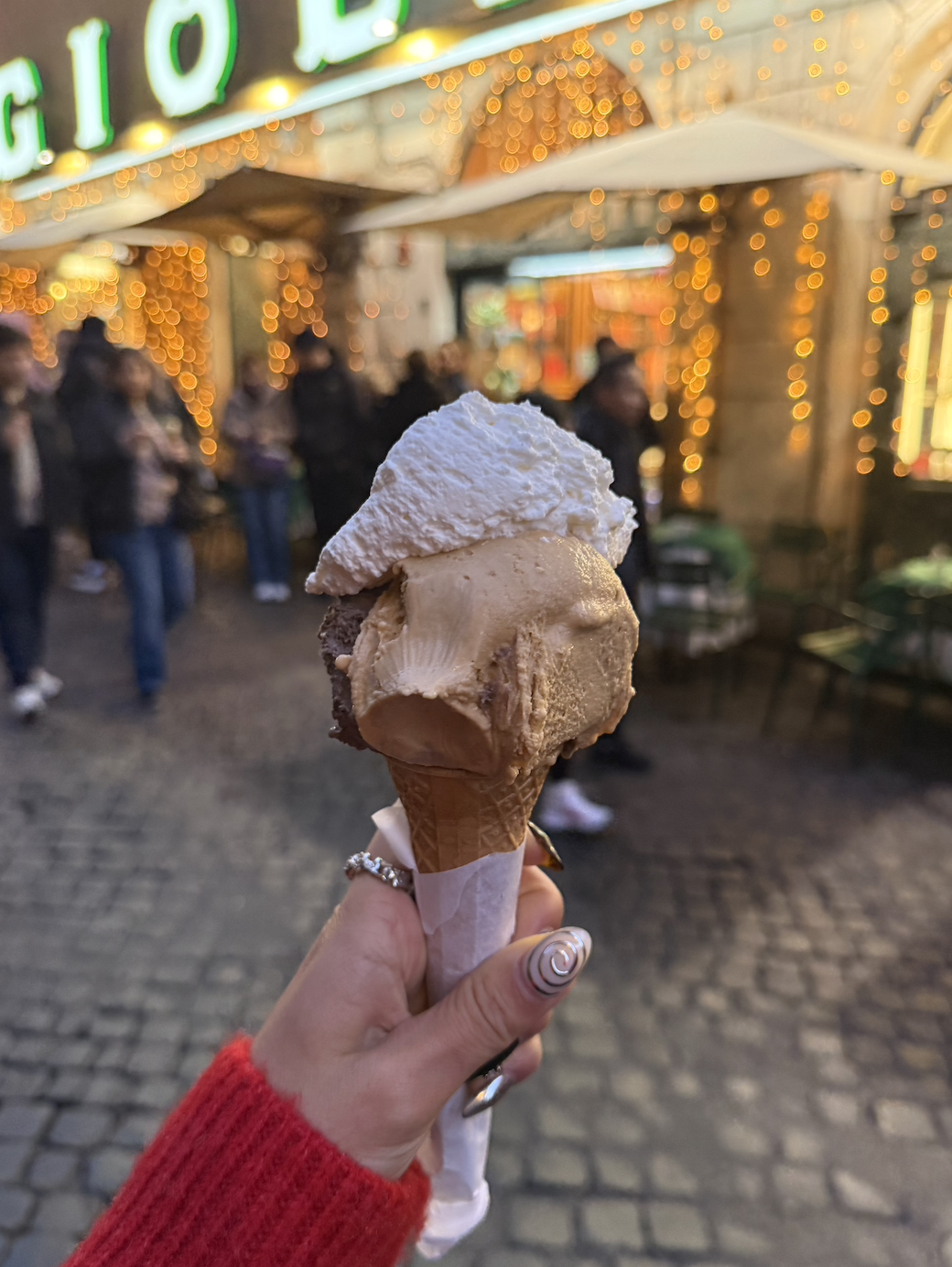
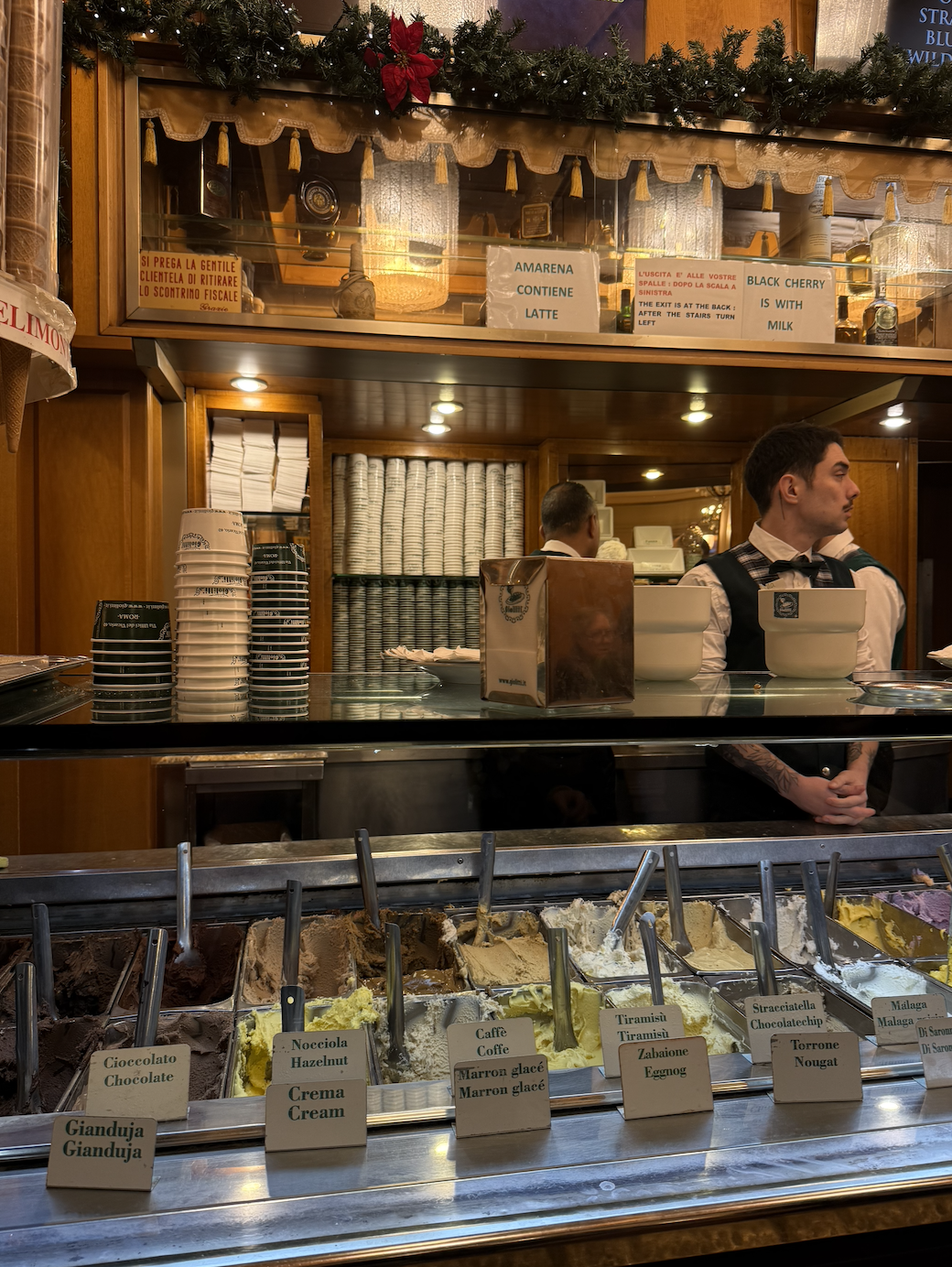
With flavors from nocciola hazelnut to eggnog and tiramisu to stracciatella, it can be difficult to choose, but they’ll give you a few flavor combos even for the standard “small” scoop. I got a combo of cookie dough and tiramisu - as an ice cream fanatic, it was the best way to end our time in Italy.
Conclusion
Italy is one of the dreamiest and most impressive cities in the world. It’s simply got it all: good food, beautiful architecture, rich history and breath-taking scenic views. The whole damn package.
While it may be a little expensive (to be fair, tourism is 90% of their GDP), you can’t help but know it’s worth it. I can confidently say this is one place you can get extremely excited about and not be let down. As a country that has unparalleled engineering, food, fashion, history and art, Italy is quite literally a living museum. Even if you fall off the beaten path, you’ll find yourself admiring whatever you stumble upon. And if you’re concerned that Rome is a city meant for lovers and you fear going without a special someone, don’t worry - you’ll surely fall in love with Rome.
Sincerely,
Hannah
